The National test the strengths of their fragile democracy with the help of a new filmmaker friend and a few key female voices.
"The National is a democratic band in the way America is a democratic country,” says the group’s frontman,Matt Berninger, with a laugh. “It’s still filled withconsiderable conflict.”
Fans familiar with Vincent Moon’s 2008 movie A Skin, ANight will understand that creative tension. In the film—whichdocuments the making of the quintet’s acclaimed fourth LP,Boxer—a simmering anxiety lurks around every corner ofConnecticut’s Tarquin Studios, the Victorian mansion where TheNational spent seemingly endless hours dissecting, analyzing andreconstructing their ornate indie-rock songs. In one memorablescene, the singer attempts to delicately voice his displeasure witha piano part. “It’s OK—there could be something better than that,”he observes. “It gets on my nerves pretty quickly—the sound of it. Idon’t love it. I don’t hate it.”
That protracted process—the passive-aggressive banter, the endless tinkering—has trailed The National since they formed two decades ago, after the Cincinnati-bred musicians reconnected in the Big Apple. And as the band’s profile has expanded—and its members spread across Ohio, New York, California and Europe—the mess of those in-the-room summits has partly shifted to the internet, with the musicians swapping demos through file services and email. That shaky democracy has reigned for seven albums. But with the ambitious, difficult-to-categorize I Am Easy to Find, they stumbled into a new collaborative system—a blurred-edge hybrid of music and visuals spearheaded in part by filmmaker Mike Mills. The director, best known for helming dramedies like 2005’s Thumbsucker and 2016’s Oscar-nominated 20th Century Women, raided the band’s stash of unfinished files and assembled those puzzle pieces into the score of a new short film—and the group, in turn, recruited Mills to produce their accompanying record of the same name. It was a meeting of kindred spirits in the messiest fashion imaginable, and it reinvigorated The National’s sense of musical danger.
“Sometimes it’s hard to see where to go when you’re all in themiddle of the same dark pocket,” Berninger says. “Mike showed upwith a flashlight and was like, ‘Hey, guys, you can also go this way.’We’re like, ‘We can?’ We started following him down a path wedidn’t totally [understand] yet.”
The partnership began in September 2017 after Mills sent aninnocent email to Berninger, suggesting they link up for a potentialproject. What form might that take? Neither party had any clue.
But that blind freedom and curiosity urged them to roll the dice. “There wasn’t any plan to do another National album anytime soon,” Berninger says. “We were exhausted. We had a lot of material, but we were like, ‘Let’s just take a little break and slowly think about it.’ So I told Mike, ‘Here’s all the half-baked [ideas] we haven’t released but we all love.’ I thought maybe he’d listen to these and be like, ‘I like this one; let’s do a video.’ Anything he wanted to do, I was up for.”
Mills, a veteran video director for bands like Air and Blonde Redhead, entered their first phone call with a similar mindset: Hefigured they’d collaborate on a clip, gain some mutual inspirationand go their separate ways. But both parties were intrigued by theblank canvas they seemed to share, by the lack of parameters they’dset forth—clearly, they were flirting with something a bit grander,if slightly amorphous.
“Matt is a very interesting, sweet trickster figure,” Mills says.“He was like, ‘What else could we do? What if we do somethingreally big? What if it was just sort of the unknown?’ I found himcompletely charming, but I’m also feeling responsible, like, ‘Whatis it? What are you talking about?’ He just wouldn’t answer. It waslike, ‘Who knows what it is? Who needs to know what it is? Whocares what the end result is? Who cares how we’re gonna put itout? We’re gonna pay for it. It’s an experiment.’”
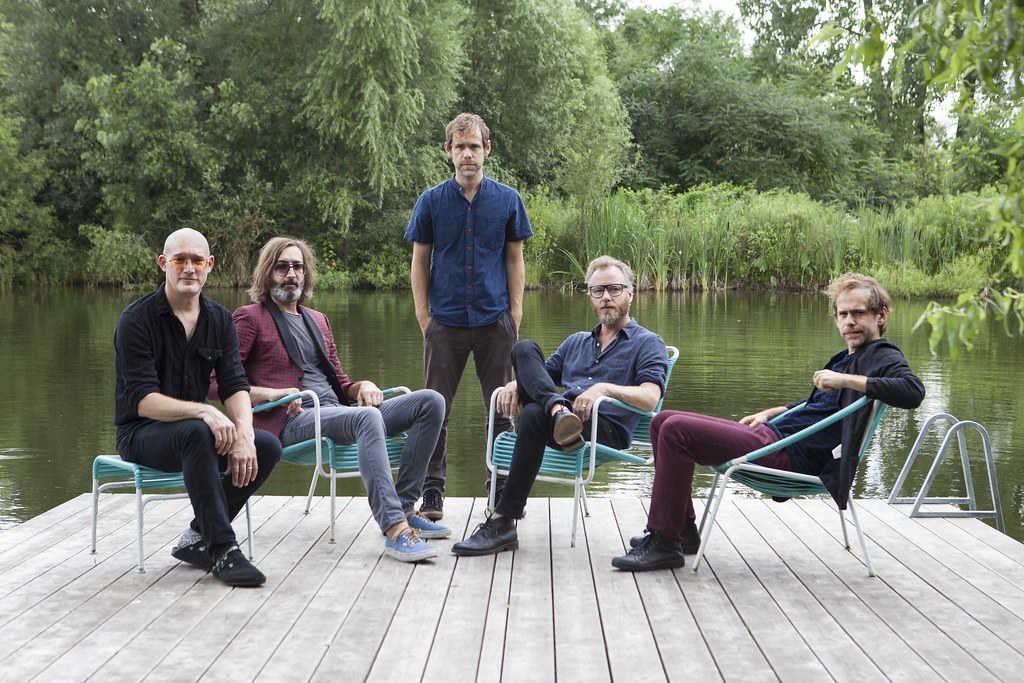
"The five of us are always the five of us, but we welcome a lot of other ideas,” Berninger says of The National’s new approach. (photo by Stephen Bloch)
For Mills, that meeting of minds arrived at a pivotal moment. After a grueling year of promoting 20th Century Women, he felt “totally lost” and mentally drained. His rejuvenation showed up via Dropbox, where he accessed a stockpile of The National’s sonic sketches from over the years—unfinished tracks, leftovers, homeless riffs and melodies.
Meanwhile, a story idea started to germinate, and Mills eventually wound up with a finished script. In March 2018, he filmed what became the impressionistic I Am Easy to Find, a 26-minute piece that follows an ordinary woman (played by Alicia Vikander) through all stages of her life—from birth to death—colored by moments of startling intimacy magnified by Mills’ detached captions (“She wants to live somewhere else,” “Arguing with her mother about getting married”) and his own mutations of several unfinished National tracks.
“I picked like seven of those songs, and then they gave me the stems when I really started editing the film,” Mills says. “That was super brave of them, especially [multi-instrumentalists] Aaron andBryce [Dessner], because they didn’t really know me that well.They were like, ‘We’re not precious. Do whatever you want. Let’sfuck things up. Let’s interrupt our way of working.’ It was like,‘Man, if I don’t really try some stuff here, it’ll be a disappointment.’So I went for it.”
Mills, a massive National fan, spent hours digging through theirtreasure trove of sounds, often swapping instruments or vocalsfrom one track into another. One breakthrough was taking thesubdued strings from what became the album version of “QuietLight”—a somber, electronic-tinged anthem—and pushing them tothe forefront for the film.
An atmosphere of “polite stealing” emerged, with the twofactions borrowing ideas from each other—and those ideasspawning other ideas. “We started doing a lot of stuff with theBrooklyn Youth Choir,” Mills continues, citing one example. “Brycedid it all, and he used my subtitles from the film for the text theywere singing. I got that song in the Dropbox one day.”
That spirit bled over into the album sessions, though it’sdifficult to pinpoint where one process ended and the other began.After giving Mills unprecedented access to their musical vault,The National recruited the director to produce their LP and bringa cinematic approach to their songs.
“We talked about how the film is like an abstract capturingof a woman’s life, and the record is like the afterlife,” Berningersays. “In producing the record, Mike started directing the afterlifetoo. Mike said, ‘I’ve never produced a record,’ and we were like,‘We don’t usually use a producer outside of the band.’ It wasn’tnecessary that Mike knew how to engineer or master or mix. Itwas a creative thing—we wanted him to direct the record, and hedid.” (“He was a kid in a candy shop,” Berninger adds. Mills uses adifferent analogy: a “pig in shit.”)
Though everyone found the experience revelatory, bassist ScottDevendorf admits that it was awkward at times watching Millstake an axe to their material, chopping away layers from theirlabors of love.
“When he was in the studio, he’d be like, ‘Let’s take everythingout,’” he recalls. “We’d be like, ‘Whoa, whoa, whoa! That’s all theguitar!’ And then we’d realize, ‘Oh, it sounds really cool and givesus a different take on what we’d normally do.’ He came at it froma non-musical/directorial place, which interests us because we’resuper musical all the time. We were happy to get out of that, like,‘OK, it doesn’t matter if it’s this chord or this sequence. Whatsounds good? What’s happening here?’ He was a good disrupter tothe whole thing.”
The band worked on the LP—which sprawled into 16 tracksover 63 minutes—at studios in Cincinnati, Austin, Paris, Berlin,Dublin, Brooklyn and other locales. But they established theirprimary headquarters at Aaron’s Long Pond, a converted-barnstudio in New York’s Hudson Valley. With the songs taking shape,The National took another bold step: Inspired by the journey ofthe film’s protagonist, they recruited cameos from some of theirfavorite frontwomen friends (including Sharon Van Etten, LisaHannigan and David Bowie collaborator Gail Ann Dorsey) to givethe album a broader palette of perspectives.
“That came from the film,” Mills says. “We had a female character, but the songs that had lyrics were all Matt’s voice. There were these interesting things happening—who is he when he’s singing in that context? Is he her? Is he somehow a manexplaining her thoughts? What’s going on? We liked the ambiguityand multiplicity of that. I remember a rush of emails: ‘Should wehave women sing? And who would it be? Is it a star person? Is itnot a star? Is it people of all ages? Is it one person or many?’ Brycequickly put together this experiment with [the singers]. Sometimesthey sang together, sometimes they did these beautiful harmonies.It wasn’t a lark. It was more, ‘Let’s see if this works.’ They did it inaround two days. It was intended to be a demo, and we thought,‘This is really cool, and it makes you listen to Matt’s lyrics.’ I thinkthere are different gender point of views in all National songsand for sure on this record because Carin [Besser] did so muchwriting. ‘You Had Your Soul With You’—that’s Carin’s perspective,writing about Matt, and Matt is singing about himself. The ideaof it not being one person but many—that fit for a lot of reasons.Musically, they liked having the bigger bouquet. And as part of thefilm, [the character represents] many people or developmentalstages or moods. Matt’s really great at thinking like that. He’s theone who taught me that line: ‘She’s not one person—she’s manycontradictory simultaneous selves.’”
“The publishing and writing and characters all got mixed up,”Berninger adds. “The songs that Carin wrote are often presentedlike they are coming from a male perspective: the husband’sperspective, the dad’s perspective. But she’s writing about me.‘Hey Rosey’ is her writing about me a little bit. So all of that—thegenders, the pronouns—got blurred and became meaningless insome ways. We knew that this record has a cohesive embodimentof this woman as this unnamed person [in the movie]. Not all oursongs are really about us or Carin or me, but most of them are. Andeven on this record, most of them are. But it allowed us, in a weirdway, to be more naked, knowing it was going to be presented in thisway. That [presentation] gave me a veil to step behind a little bit,which was a relief.”
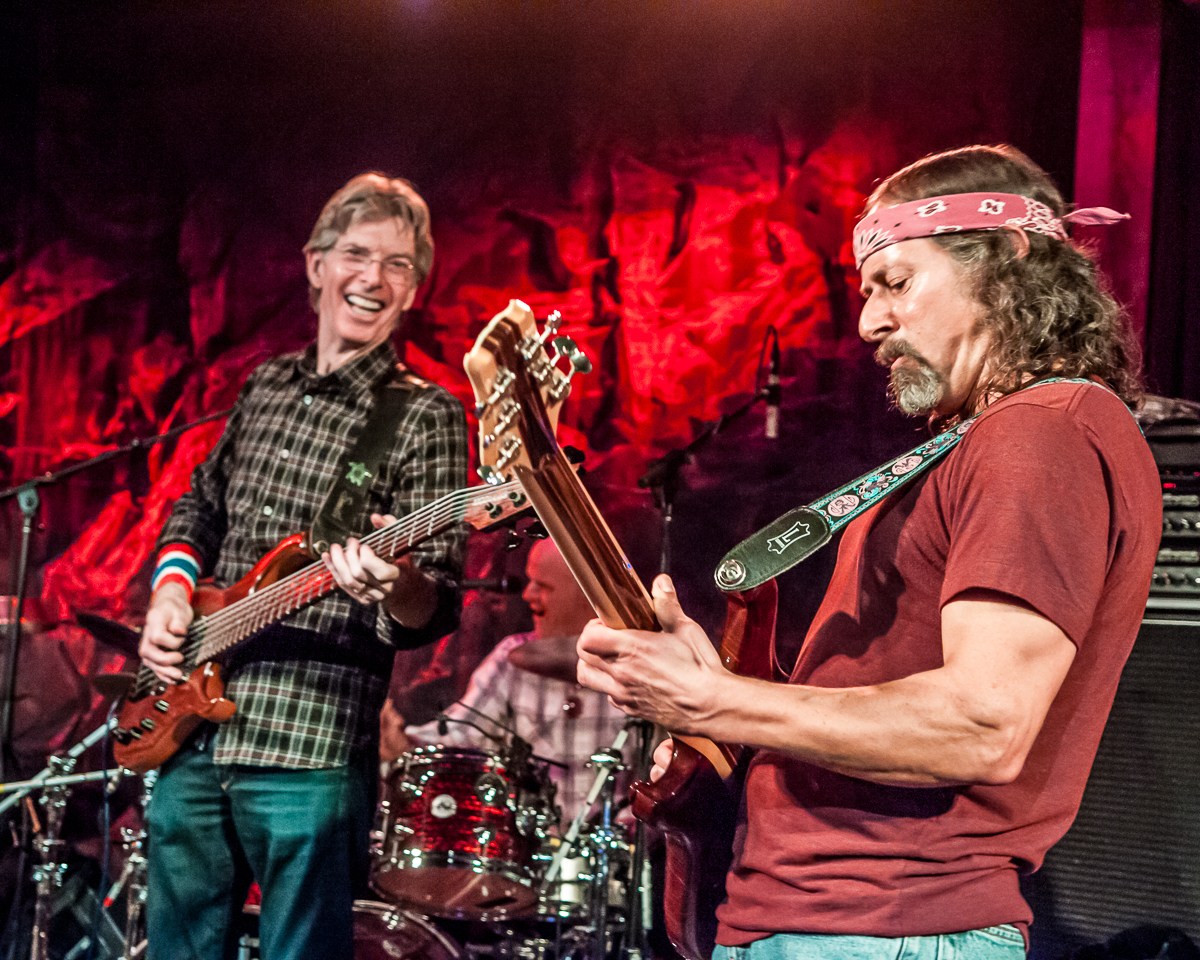
"There are a myriad of lessons to be learned from the Grateful Dead,” Scott Devendorf says of his time working with Bob Weir and on Day of the Dead.” (photo by Stephen Bloch)
While The National didn't bring on these female guests as some statement of gender equality, Devendorf says that move did make sense given the overall “state of the world.”
“When the film started to take shape and the themes [emerged],we thought, ‘It really makes sense to have a bunch of female vocalson this,’” he says. “Matt was pretty excited—for philosophicalreasons, practical reasons—to have someone else be part of a song’sidentity. It’s almost like a play with voices coming in like charactersin the story. It made it more buoyant.”
“Hearing the songs with other people made me realize they’d added a whole other side of the pyramid,” Berninger continues. “Something that was 2-D suddenly became 3-D—it was like in The Wizard of Oz when it turns into color. We knew the film would have different versions, but would I be removed from some of these songs on the record? We all thought, ‘That’s great.’ I bet in reality there are more lyrics coming out of my mouth on this record than any previous National record. That’swhy it’s so long—there’s not less me, there’s just alot more colors of other people. Even if I was beingremoved from a song, even if there was a little partof my ego that stung a tiny bit, the fact that it was anew idea was more exciting. I like that I don’t haveto be the presenter of these emotional cliff dives allthe time. I like that somebody else has to do it.
“The doors on The National have been open for a while with the fluidity of collaborators coming in,” Berninger adds. “The five of us are always the five of us, but we welcome a lot of other ideas, whether it’s Sufjan Stevens or Justin Vernon or Richard Reed Parry, Thomas Bartlett, our horn players Kyle Resnick and Ben Lanz. The DNA of The National is a real mutt.”
Another lauded musician who has grown into a member ofThe National’s extended family is Bob Weir, and the majority ofthe band collaborated with the guitarist on his most recent soloLP, 2016’s Blue Mountain. Around the same time, the Dessnersalso produced and curated Day of the Dead, an expansive tributecompilation celebrating the Grateful Dead—which Berningercalls one of their longtime “spirit bands.”
“The biggest takeaway [from working with Weir] was twothings: Take care of your health and just chill out,” says Berninger,the only member of The National who doesn’t have roots in theDead world. “Bob always said, ‘Don’t stress the static.’ I think alot of us for a long time now, not just on this record, have beentrying to embody that—even though we do stress the static allthe time.”
“The spirit of doing those songs informed our new way ofworking,” Devendorf says of Day of the Dead and touring withWeir. “It was like, ‘It shouldn’t have to be painful. It should behard but not emotionally taxing.’ That was something we learnedfrom all that stuff that’s eternally stuck with us now in a great way.It’s a touchstone for us—‘Oh, yeah, remember how [enjoyable]that was?’ There are a myriad of lessons to be learned from theGrateful Dead.”
For Berninger, I Am Easy to Find is the end result of applyingthose lessons, both musical and interpersonal.
“There’s a free-for-all nature to it,” he says. “Let it be long, let it be hairy, let the songs meander, let there be long intros and outros, let there be things that maybe don’t fit—we’re not trying to make this pop record. We’ve loosened our grip on everything slowly over the years. In the early years, every decision was a massive, massive crisis. We’ve all let each other do their thing and sit with things before we have an immediate reaction. The Dead figured out how to have a peaceful collaboration for a long, long time. We all value and have faith in thepreciousness of the five-guy-band thing, but we’renot dogmatic about it.”
The National of yore would’ve been too preciousto endure the boundary-shattering experiment ofI Am Easy to Find. They needed outsiders to givethem perspective—and, over a decade later, they’veopened an artistic door they didn’t even knowwas shut.
“If I ever have another sort of collaborative meeting of the spirits half as good as this, I’ll be lucky,” Berninger says. “Mike changed the way we all think about our own identities as artists. He really knows how to make other artists feel good about their messy art, and that’s a gift. Maybe we all needed somebody to be so kind to us—but also to say, ‘I hear something else. I hear you guys evolving.’”
This article originally appears in the July/August 2019 issue of Relix. For more features, interviews, album reviews and more, subscribe here.