Rhett Miller: Night Moves

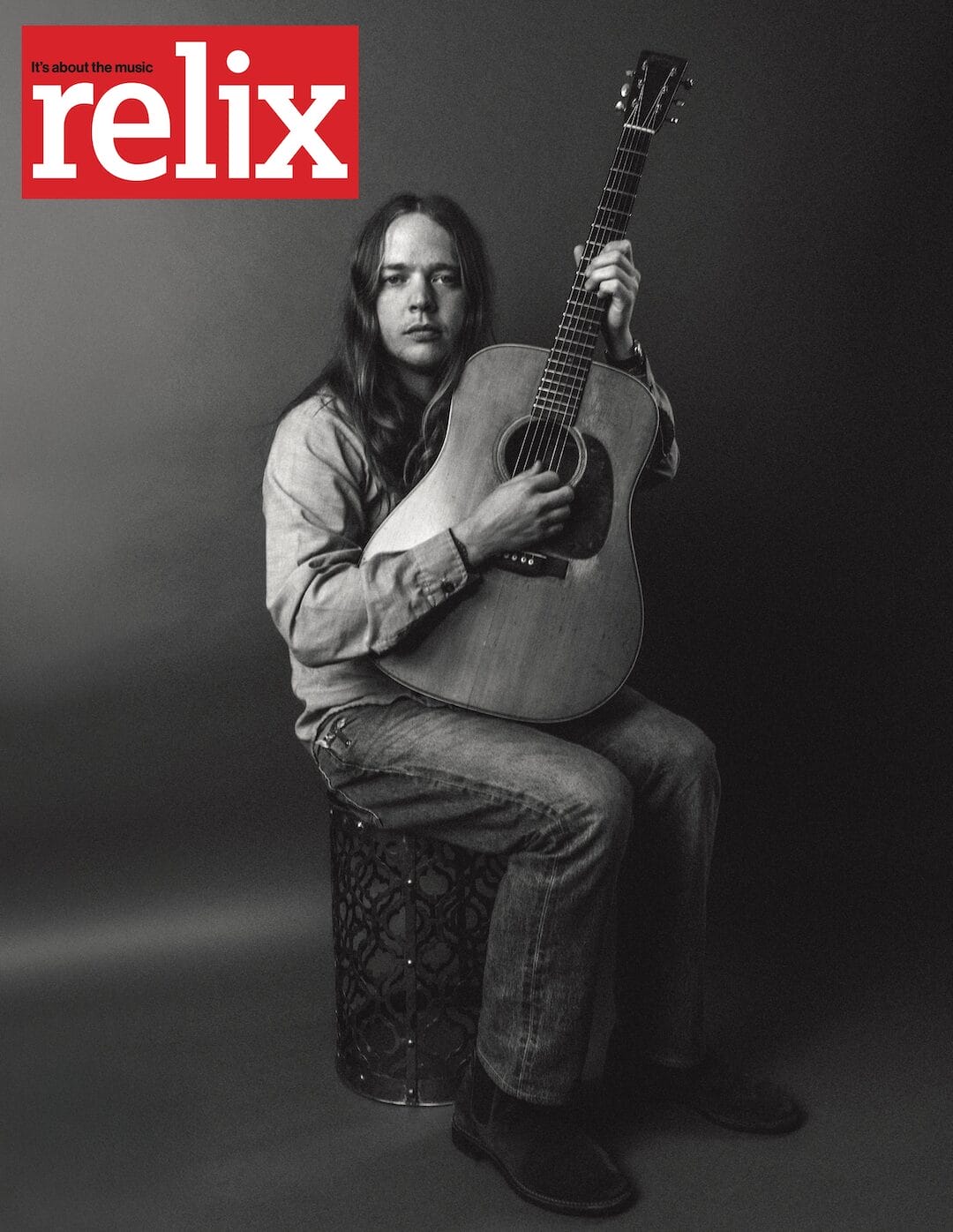
photo: Jason Quigley
***
Rhett Miller is taking in a beautiful, mid-September Sunday morning at his home in New York’s Hudson Valley. It’s a sunny time for the veteran singer-songwriter and guitarist, just a few weeks out from the release of his 10th solo album, A lifetime of riding by night, and a corresponding tour in support. Yet, Miller is also just two years removed from one of the darkest and most fretful periods of his nearly four-decade career when, literally, he was losing his voice.
It was October 2023, and Miller was struggling through a European tour with his longtime band, Old 97’s. The run was, itself, a bit of a back-to-basics jaunt for the Texas-bred, Americana rock quartet. Stateside, the group regularly fills theaters, but building a similar following in Europe has never been a priority. So, touring abroad meant smaller venues, a shoestring budget and adjustments in gear and approach.
“We didn’t have in-ear monitors, which I’ve grown dependent on for keeping my voice from blowing out trying to scream over the guitar amplifier,” Miller recalls. “I did enjoy [the tour]. It felt like the mid- 1990s. We were in small clubs. I was screaming my head o›, blowing my voice out every night. But, at the end of it, I knew something was wrong.”
After 40 years, the notes were, suddenly, no longer there for Miller. Once he returned to New York, he consulted a throat specialist and began the process of intensive vocal therapy. Without surgery, Miller could maintain his damaged voice, but would likely no longer have the same vocal range or access to certain notes.
Those notes, though, were important to the musician, especially to his performance on “Timebomb,” a song that had become his established closer each night. Whether with Old 97’s or solo, it was Miller’s go-to finale. Now—with its title dripping with unintended irony—the clock was ticking down to its demise.
“I didn’t want to give up on the idea of ever singing those notes again in my life,” Miller says.
He agreed to some diagnostic testing. The results revealed a cyst on one of Miller’s vocal folds. In reaction to the cyst, a polyp had formed on the other fold. The afflicting pair were preventing both muscular membranes in his throat from vibrating as they should.
“So, yeah, it was scary,” Miller says.
Surgery was an option, but Miller had some concerns, knowing all too well the story of Julie Andrews, whose voice never recovered from a similar procedure. He also knew of all the advancements in modern medicine in the 20 years since Andrews’ operation.
Miller wrestled with the decision. At an early age, he’d seen his beloved grandmother undergo elective surgery. Her reaction to the anesthetic may well have triggered an ultimately fatal bout with Alzheimer’s disease. More practically for Miller, there would be the necessity of time o› from the road—without an income—for several months of recovery.
“It was not something I was glib about,” Miller says.
As always, though, he continued to write songs. And—a year after that fateful European tour, with the problem still present—he resolved to have the surgery. Yet, before he went under the knife, Miller had a plan. He would record all of his vocals and guitar for a new album. Then, he’d turn the tracks over to his Old 97’s bandmate, Murry Hammond, to produce the record while he rehabbed.
***
Miller’s friendship with Hammond stretches all the way back to their childhoods in the suburbs of Dallas. It was Hammond who produced Miller’s first official release— a hand-numbered and signed run of 1,000 CDs titled Mythologies back in the late 1980s, when Miller was still a teen. For both, there was an appealing symmetry to the idea of Hammond reprising his role for this set.
“Murry and I are about as close as two co-workers can be. He recorded my first demos when I was 15 years old. He gave me my first gigs, letting me open for his band, Peyote Cowboys, when I was 16 years old. He taught me how to be in a band. He convinced me to drop out of college, even though I had a full scholarship to Sarah Lawrence at the time. He’s been the most influential character in my life and, obviously, one of my best friends,” Miller says. “It occurred to me that there would be something really beautiful about Murry and me coming back together, after all these decades, as producer and artist.”
However, Miller’s choice to enlist Hammond wasn’t based purely on friendship and sentiment. Hammond’s recent solo albums portrayed a certain ambience that Miller felt would suit his material. There was also no one he could trust more than Hammond for what could, potentially, mark his final time making a record. Hammond respected the gravity of the task.
“It was a very anxious time,” Hammond says. “Even with successful surgeries, often times a vocalist’s voice will change. There will be something about the timbre, or the character of it, that sometimes won’t be the same. We wanted to capture his voice before he went in [for surgery], to have this document in case it was the last one.”
A prolific songwriter, Miller’s output can be staggering. Routinely churning out dozens of tunes, his priority always has been, and remains, Old 97’s—a self-admitted ornery bunch with particular tastes. The quartet retains the first right to accept or reject a song; declining sets it free to find a second life in Miller’s solo repertoire. After the foursome’s latest culling, Miller brought his 20-some remaining contenders to Hammond.
In early December of 2024, the pair loaded into Dave’s Room, a cozy studio in the Los Angeles suburb of Van Nuys. Over the course of two days, Hammond tracked Miller’s guitar and increasingly fragile voice. Three days later, Miller went in for surgery.
With unwavering confidence, Miller entrusted Hammond to complete the album—however he saw fit—without his input and bring it back when it was finished. “I’m amazed he trusted me the way he did,” Hammond says.
Tapes in hand, Hammond retreated to his Big Red Stove studio in Port Orchard, Wash.—a waterside city situated 13 miles west of Seattle that can be cold, damp and gray during the winter. And for two months, as the calendar flipped to 2025, he hibernated at Big Red Stove with Miller’s 20 songs.
While Miller recovered, Hammond leaned into the production. Hammond focused on a dozen or so songs to flesh out with selective instrumentation. “The ones that rose to the top were the really honest ones,” Hammond says. “They were the ones that were playful.”
Hammond recruited musicians that he’d utilized on his own solo work. In conscientious spots, Richard Hewitt’s drums, Faith Shippey’s bass, and Annie Crawford’s harmonium sparsely dressed Miller’s vulnerable vocal and guitar. Hammond’s hands on piano and Mellotron, as well, colored nearly every cut.
“I just worked on what would achieve lifto† in all of these tunes,” Hammond says. “The piano was really in charge of a lot of hooks—and things like Mellotron flute and definitely Mellotron strings. [The songs] were really taking to the strings.”
Hammond cared for the recordings as if they were his own. With a smile, he confesses to working much harder on Miller’s project than on any Old 97’s album. “And, I work really hard on Old 97’s,” Hammond says. “For this, it was just a lot of being inside of it and really caring about it. I love Rhett’s writing anyway, so it was absolutely a labor of love.”
***
Hammond embellished Miller’s unadorned sketches with dreamy, other worldly, definitively psychedelic tones. Recalling British mood pioneers such as Pink Floyd’s Syd Barrett and Nick Drake, Hammond saw the opportunity to construct a record sonically unique in Miller’s catalog. Meanwhile, back in New York, Miller sat in silence.
Miller’s friend, musical peer and fellow Texan, Hayes Carll, had counseled him on the critical importance of recovery. Carll, was also a vocal-surgery veteran and cautioned Miller about rebelling in rehab. “That’s the most important time,” Miller says. “The surgery, at this point, is pretty guaranteed to work. But, during those months of rehab, if you don’t follow the protocol, you can really do damage to your voice.”
At first, Miller did not speak at all. Gradually, he was permitted to but only in a very limited capacity. Certainly curious, though, he exchanged emails with Hammond while remaining steadfast in his promise of autonomy.
“Rhett has so much courage in letting me do this. I don’t know how he did it,” Hammond says. “He’d write asking, ‘Y’all have anything to show me yet?’ And we were almost all the way done with the record. I really wanted him to hear something more mixed. So, I just wrote him and said, ‘I’m not playing you anything, and I don’t know how you can stand this.’ He said, ‘Well, whenever you can. I’m kind of dying over here.’”
The winter’s darkness turned into the rebirth of spring. Successfully recovered, Miller returned to the road with Old 97’s. At a West Coast tour stop, Hammond gave Miller a digital draft of the finished album. Miller listened on headphones, as he sat staring at the Pacific Ocean.
“It was incredibly moving,” Miller says. “It was such a love letter from an old friend. It was more than I ever could have hoped for.”
Hammond’s influence was transformative throughout the 13 entries—he even divided the opener, “A Little Song,” into two interludes and a full-length composition. Initially, Miller balked at the idea. “I thought he was crazy. He had to sell me on it,” Miller says. “There was an iteration of this album where no complete version of “A Little Song” would appear at any point. I had to beg him, ‘Can we please, at the end, just put the whole version of the song on the album?’ He was kind enough to let me win that little one.”
Miller credits Hammond with sorting out the chaos, finding a cohesive thread in a set of songs written during a period of inner turmoil. To Hammond, the record is a concept album. And, in essence, it very much unfolds like one, though more so in mood and atmosphere, without a clearly traditional narrative.
“I like dipping into the back rooms of the human heart and all the things you explore there,” Hammond says.
Miller sprinkled many of the songs with regret, with loss and with the piecing together of things that had broken. Still, for as deeply personal an album as A lifetime of riding by night is, it also stands as an emblem of collaboration.
In addition to Hammond’s indelible sonic thumbprint, much of the repertoire was co-written. Evan Felker, the singer songwriter and guitarist from the band Turnpike Troubadours, receives credit on three of the album’s 11 full songs—lead single “Come as You Are,” “Time Again” and “A Little Song.” Additionally, Miller partnered with a pair of Nashville songstresses—country connoisseur Caitlin Rose and psychedelic-soul chanteuse Nicole Atkins—as well as former New Yorker editor Ben Greenman.
It was on the record’s second single, “All for You,” where Miller’s own intent to distance himself, personally, conjured one of the collection’s more intimate statements. The song’s initial spark, guitar line and melodic hook came from Gin Blossoms’ Jesse Valenzuela. Writing for Valenzuela, Miller explored certain emotional places he would typically avoid and, in the process, revealed a side of himself.
“If I did something that felt overly sentimental, or too sweet or too personal or vulnerable, it was fine because it was going to be sung by somebody else,” Miller explains. “I came up with a song that felt incredibly personal and incredibly sweet. It actually felt like an incredible love letter to my partner, Erica, and to my kids. A lot of times, you have to give yourself permission to do something you otherwise wouldn’t have done because it’s scary or because it’s against the rules. There are no rules.”
Guesting at songwriting retreats, or in his current post as a teacher at New York’s The New School, Miller encourages the rejecting of doctrines. He rails against the arbiters of authenticity who monitor, in particular, the Americana scene. “Ask, ‘What is great?’” Miller professes. “Ask, ‘What if?’”
“The thing that most thoroughly ruins a song is trying to anticipate what the audience, the marketplace or the record label wants,” Miller says. “What’s important for authenticity, as a writer, is that something is really coming from you as a true expression of your feelings, of your artistic drive.”
In the wake of his surgery, Miller contemplated a life aside from music. His artistic drive as a writer has included authoring past pieces for The Atlantic and Sports Illustrated, among others. Currently, he is writing and developing a sitcom with ABC.
It’s all part of the greater creative journey Miller has been on for the past 40 years. He’s been sober for a decade. His children will graduate from college soon. At the 2025 Americana Honors & Awards, Old 97’s received a Lifetime Achievement award. And now, what could have been his final record is, instead, another dawn in a lifetime of riding by night.
The album concludes with “Brand New Heart,” a quietly a†ecting number that Hammond insisted be the finale. It’s a bittersweet love story from Miller and Rose, detailing a couple dealing with Alzheimer’s. It’s accepting—and endearingly so.
Pushing for his best effort, there were times on the record when Miller could clearly hear that his voice was compromised. After his recovery, he thought of rerecording his vocals, but, instead, accepted those moments of imperfection. They were honest, human and, ultimately, essential.
“It’s so easy to talk yourself out of being emotionally vulnerable,” Miller says. “I’m glad I went there. I’m glad Murry encouraged me to go there. I’m really grateful people are willing to let me do it.”