The Rolling Stones: Foreign Tongues
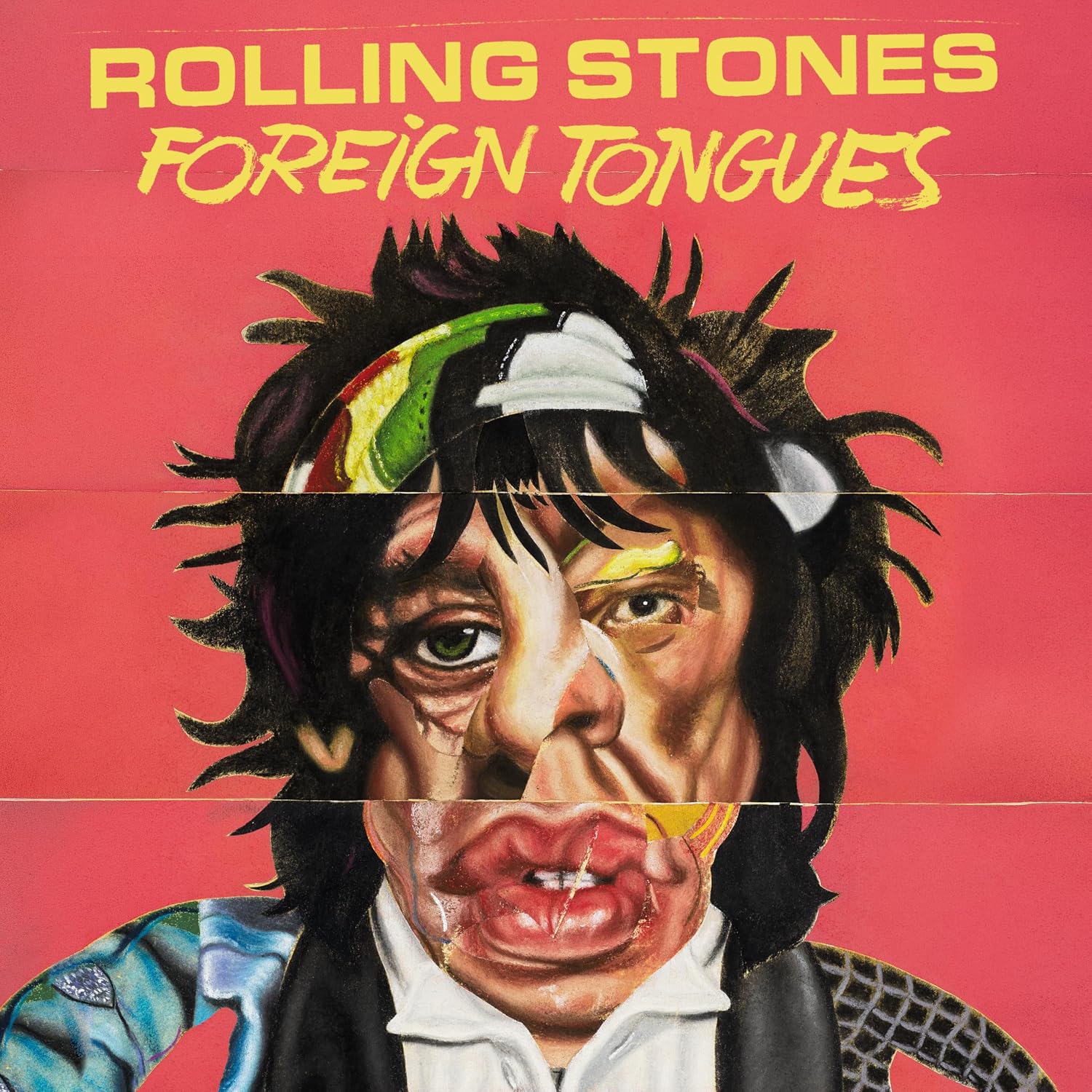
In Relix’s glowing review of 2023’s Hackney Diamonds, The Rolling Stones’ first new studio album consisting primarily of original material since 2005, we commented that the release “wouldn’t be the worst way to go out” if it proved to be their grand finale, adding that they were already at work on a followup. That sequel is now here, and Foreign Tongues—the Stones’ 25th studio set by someone’s count—is just as impressive as its predecessor, at its best the equal of anything they’ve released since Some Girls nearly half a century ago. We can reprise what we said last time, but it’s never a good bet to count these guys out.
Working with producer Andrew Watt, as they did on Hackney Diamonds (and as Elton John, Paul McCartney, Pearl Jam and others have) the Stones present 14 new tracks on Foreign Tongues (some of them reportedly leftovers from the previous album’s sessions), checking off all the usual boxes—blasting rockers, soulful R&B/dance-inspired grooves, honky-tonk country tune, earthy Keith Richards-sung tune—that have populated their albums since Sticky Fingers.
That’s not a bad thing—unless one expects the group to slavishly hitch onto contemporary production and style trends just because they can (and, in more questionable moments, have). Thankfully, they mostly avoid that trap with their latest: Mick Jagger, especially, has tried just a bit too hard at times to push the group into ill-fitting musical areas, dragging the others along with him kicking and screaming, but here he’s perfectly content to bask in his anointed role as consummate rock and roll frontman.
At the same time, the new songs Jagger-Richards have come up, several of which become instant earworms, also manage to skirt nostalgia. If there’s one thing the Rolling Stones know how to do well by now, it’s how to be the Rolling Stones, and considering that the two surviving founders—Jagger and Richards—are both in their 80s, with co-lead guitarist Ronnie Wood right behind them at a mere 79, that’s their m.o. here, plain and simple. Jagger’s voice, unlike those of some of his contemporaries, remains vital—youthful-sounding and strong; Richards’ and Wood’s guitar work veers from exhilarating to spellbinding, inventive and stuffed with revelations. And they’ve surrounded themselves with folks who are committed to burnishing the Stones’ essence.
The cast of characters supporting the trio of veterans, for the most part, is kept trim but busy on Foreign Tongues. In addition to Jagger, Richards and Wood, most of the tracks are filled out by longtime bassist Darryl Jones, drummer Steve Jordan (who replaced Charlie Watts, who died in 2021), keyboardist Matt Clifford and producer Watt offering various keys, guitar and background vocals. Guests include McCartney on one track (he was also featured on a single Hackney number); Steve Winwood on understated organ and piano, on several; the Cure’s Robert Smith on synths, guitar and vocals; Benmont Tench of Tom Petty’s Heartbreakers on organ; and assorted horn players and background vocalists. Oh yeah, Bruno Mars plays cowbell on one tune—not that you can hear it.
The heavy lifting throughout, though, is done by the three Stones; no one’s slacking. From the intro of “Rough and Twisted,” the gutbucket-blues opener, stacked with greasy slide guitar and Ian Stewart-esque barrelhouse piano, it’s apparent that these gentlemen mean business. The track, a Jagger-Richards composition reminiscent of the ancient gritty covers on the band’s decade-old Blue and Lonesome, is the best kind of nasty: “Drive me where I wanna go,” Jagger insists repeatedly, as if he’d have to ask twice. Lead single “In the Stars,” which follows, recalls any number of melodic soul romps that the Stones have always found so endearing. As on the opener, Wood contributes not only guitar but bass, as Jagger, for the first time on the album but not the last, tells it like it is: “Well there’s a poisonous cloud/There’s a sickness in the land/All the judges in their robes got their rubber stamps/Well do you wanna dance ’til the roof caves in/And the guitars scream and the choir still sings.”
“Jealous Lover” is the album’s sole misstep, on its surface a perfectly good soul ballad save for Jagger’s cringey Bee-Gees-circa-1977 falsetto. One might hope that Winwood’s Rhodes and organ would salvage the tune, but alas, he’s buried in the mix. Miss hearing “Emotional Rescue”? That’s the one for you. Not to worry though, the playful, Some Girls-ish “Mr. Charm” comes quickly to the rescue, a bit on the slight side lyrically in the choruses (“Call me Mr. Charm, Mr. Charm, Mr. Charm/I would never, never, never, never do you harm/Call me Mr. Charm, Mr. Charm, Mr. Charm”), more than compensated for in the verses: You can’t go wrong with any song that namechecks “Mad mogul Mr. Musk,” and not in a good way.
“Divine Intervention”—the basic quintet augmented by Smith, Winwood, Watt and a pair of horn-tooters—returns the program to raging rock territory, Jordan making his presence felt, Jagger laying it on thick (“Dystopian values are too hot to handle”) and assisting Richards/Wood with a few guitar licks of his own (as if they need his help). If you were wondering when the token midtempo Gram Parsons-influenced honky-tonk country entry would turn up, it’s next, in the form of the loping “Ringing Hollow.” It would be an eye-roller if the Stones weren’t so good at this sort of thing, and let’s face it, you’re never gonna hear Lee Greenwood (or Jason Aldean, for that matter) lament that “Lady Liberty don’t look so good when she’s wearing a frown.”
It’s off to stomping rock and roll land again with the back-to-back “Never Wanna Lose You” and “Hit Me in the Head,” the former (co-written by Matt Clifford) hiding the aforementioned Bruno Mars contribution (Did someone suggest “Less cowbell”?) and the latter, thankfully, not hiding the album’s sole leftover Charlie Watts drum part. “You Know I’m No Good,” the first of the album’s two covers, comes via the late Amy Winehouse, and make no mistake, these fellows know a Rolling Stones song when they hear one. Jordan and Jones, both fully integrated into the mix, rage; Winwood, more prominent here, adds subtle color (but never would’ve made it as a full-fledged Stone); Jagger reminds that he’s a hell of a harmonica player; and the guitar interplay is something one might have expected from—I dunno, maybe Keith Richards and Ronnie Wood circa 1978?
The lone Richards vocal shot is next, “Some of Us,” and if he sounds his 82 while Jagger can still pass for half that, well, he’s Keith F’in’ Richards so just feel blessed that he (talk about unexpected) still breathes. “Some of Us,” which Richards reportedly first worked on some 40 years ago, is a stunner, an unabashed all-you-need-is-love, wear-it-on-your-sleeve, romance-and-devotion ballad that, with support from Winwood’s piano, Tench’s organ and layers of bold guitars, is all kinds of warm and fuzzy—even if he never identifies who the “some of us…on our knees” are.
“Covered in You” is the track on which that bass player from that rival band sits in, as he did on the previous album’s “Bite My Head Off,” and while one can’t help but dream of bringing in Ringo as well next time and going for a true Rolling Beatles collab, the truth is McCartney’s bass part here really isn’t all that distinguishable. He’s playing great, of course, but they could have gotten any competent rock bass player and it wouldn’t have made all that much difference—it’s the thought that counts. Still, you can’t go wrong with a tune that finds Mick Jagger (who just recently let it be known that he prefers to keep politics out of music) blaring, “I wake up sick and tired of all these autocrats/You know they seem to be breeding like a swarm of dirty rats/With their missiles on parade and they’re wreathed in gold brocade,” then expounding on just why he wants that known. A free tip to Mick though: Please don’t try to rap.
“Side Effects,” a Jagger-Richards-Watt credit, might have been ostentatious or worse in the hands of another band, but this isn’t another band, and framed as a funky wallop and home to Wood’s finest solo on the album, it’s another keeper. “There’s a price to pay for everything/Everything you put in your veins/I paid,” Jagger barks, and need you even ask how he knows this?
“Back in Your Life,” Foreign Tongues’ longest track at 6:13, and another Watt co-write, is the penultimate track on the album but perhaps the ultimate performance. Jagger’s masterful vocal turn recalls the best of the band’s ’70s ballads and, wait, did we just say that “Side Effects” contains Wood’s most moving solo on the album? Check that—it’s this one.
How to end it? With a Chuck Berry cover, of course. “Beautiful Delilah,” released by its author on Chess Records in 1958, is hardly one of the biggies—it only peaked at number 81 in Billboard, although it made it to The Great Twenty-Eight, the one Chuck Berry compilation that belongs in every record collection. No matter—this is what it always has come down to for Mick Jagger and Keith Richards, just two music freaks singing and strumming (augmented by Chili Pepper Chad Smith banging a single bass drum). There’s pure joy in their off-the-cuff, lo-fi spin through a tune they’ve likely known since they were a couple of scrounging teens dreaming big, wondering about America and this Berry guy and what it would be like to have your own songs get heard by people you’ve never even met. It’s the least foreign thing on Foreign Tongues and maybe, just maybe, the most Rolling Stones thing on it too.
Foreign Tongues, which the band members have said was made in less than a month, is never going to replace Beggars Banquet, Aftermath or Some Girls on anyone’s list of fave Stones albums. But it’s a contender, in good part due to the element of surprise—surprise because who, upon first hearing a gaggle of young punks in 1965 complain that they couldn’t get no satisfaction (oh, they sure as hell could too), ever expected this entity called the Rolling Stones to last as long as it has, and to still be so potent?
But it’s also not a surprise—not a surprise because these long-distance runners made it clear long ago that if you start them up, they’ll never stop, never stop, never stop. Of course, they will, they have to, and it’s coming sooner than later—you know it and it’s begun to sink in with them too.
But rest assured, they’re not there yet.