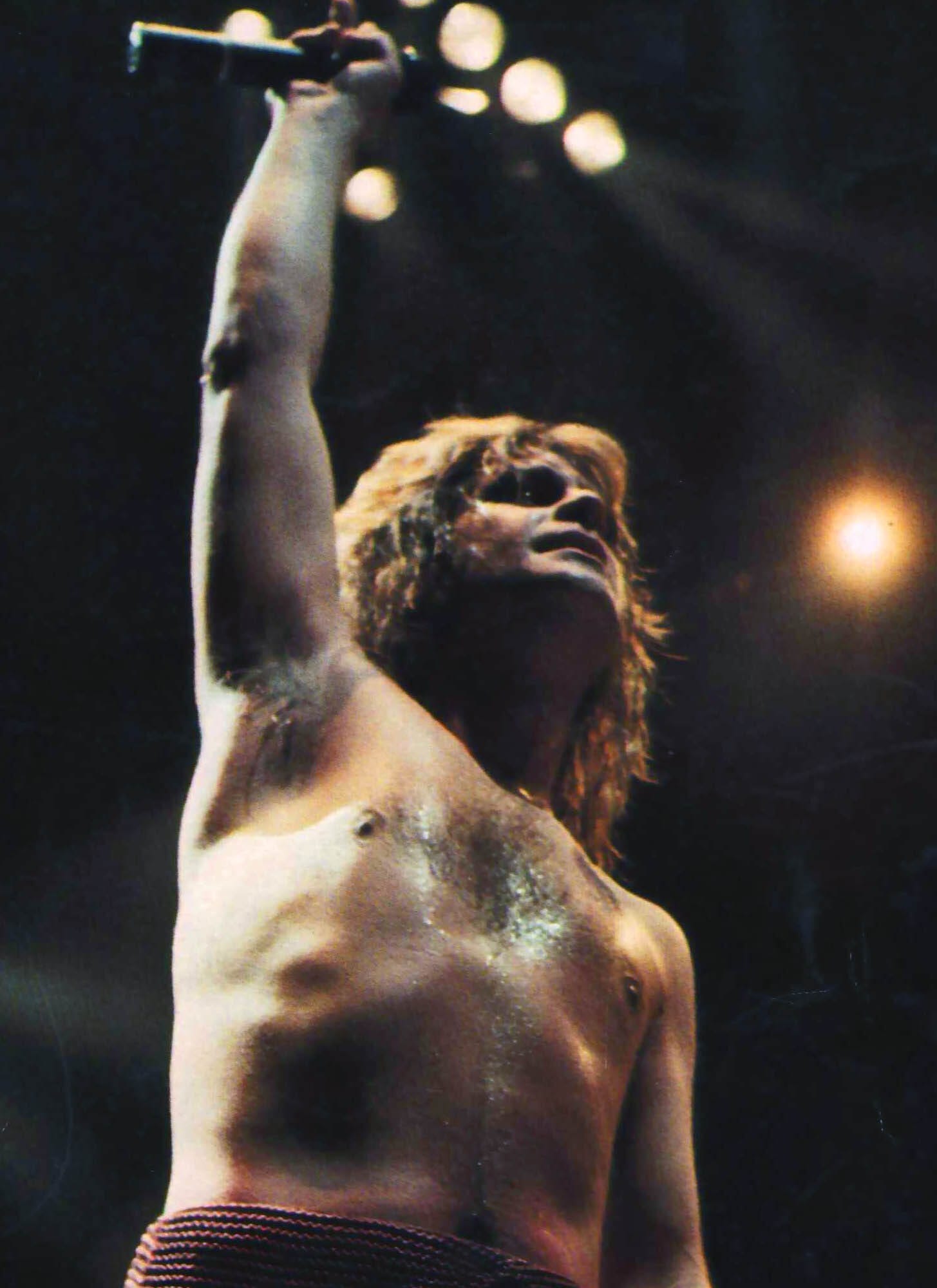
"Ozzy Osbourne" by Ted Van Pelt is licensed under CC BY 2.0.
Ozzy Osbourne, the godfather of heavy metal, has died. In his tenure as the founding frontman for Black Sabbath and his solo career, the singer and songwriter guided the development of a titanic subculture by possessing the hardest-hitting strains of rock with grim themes and his unmistakable howl, earning widespread reverence and household recognition as the “Prince of Darkness.” He was 76.
“It is with more sadness than mere words can convey that we have to report that our beloved Ozzy Osbourne has passed away this morning,” his family announced in a statement. “He was with his family and surrounded by love. We ask everyone to respect our family privacy at this time.”
Born John Michael Osbourne on Dec. 3, 1948, Ozzy was raised by a working-class family in the Aston area of Birmingham and adopted his identifying nickname as a child. After struggling and suffering abuse in school, he left to labor in factories and slaughterhouses at the age of 15. He was initially inspired to pursue a life as a musician after hearing The Beatles’ 1963 hit “She Loves You,” and he took his first step towards that future in 1967 by joining bassist Geezer Butler in his band Rare Breed.
By 1968, Osbourne and Butler had formed a new act with guitarist Tony Iommi and drummer Bill Ward, known first as the Polka Tulk Blues Band, then as Earth (which Osbourne famously hated), and from 1969 on as Black Sabbath. The quartet took their name from a 1963 Italian horror film advertised at a theater across from their rehearsal space and endeavored to match its intensity, meeting audience demand for the macabre by incorporating sounds of overwhelming dread and despair into their heavy blues-rock style. They fully embraced their new perspective with “Black Sabbath,” which channels Butler’s vision of a silhouetted figure at the foot of his bed in lyrics co-authored by Osbourne and haunting tritone riffs.
On Friday the 13th in February, 1970, Black Sabbath released their self-titled debut album, which quickly rose to the Top 10 on the UK albums chart and a long stint at #23 on the Billboard 200 following its North American release in May. Although their sound would evolve significantly, abandoning their early blues and prog impulses for a more complete embrace of darkness, Sabbath’s first overdriven cacophony of jagged riffs and pounding rhythms established their sonic foundations and is widely recognized as the first heavy metal album.
Black Sabbath paired their brutal and virtuosic industrial grind with Osbourne’s doomsaying lyrics, which regarded their contemporary anxieties with biblical awe, as heard in the vitriolic indictment of the Vietnam War on “War Pigs.” Born into a popular music landscape defined by its wide-eyed optimism, they championed the voice of the disaffected with the legendary series of 1970’s Paranoid, 1971’s Master of Reality, 1972’s Black Sabbath, Vol. 4 and 1973’s Sabbath Bloody Sabbath. Their earliest records were critically panned, later entries earned only conditional approval and all received next to no radio airplay, but their first five albums earned Platinum certification in the US regardless.
Osbourne embodied his band’s appetite for destruction from the front of the stage, where he wailed and snarled in an anguished fervor while erupting and collapsing in dramatic swells of energy. As the group ascended to rock superstardom, increasing substance abuse issues earned him a reputation for shocking, unpredictable behavior in his professional and personal life. After 1975’s eclectic but still tight Sabotage began a slide down the charts, internal tensions caused Black Sabbath to unravel. In 1979, years of bitter conflict came to a head with Osbourne’s ejection from the band.
As the band continued with Ronnie James Dio, Osbourne used the check for Black Sabbath’s name he took in the break to fuel a multi-month bender in a Hollywood hotel room. He found his way back to the spotlight through new connections to Sharon Arden, his manager and future spouse, and Randy Rhoads, the guitarist with whom he formed his post-Sabbath independent outfit. With his new band, Osbourne released his solo debut Blizzard of Ozz in 1980, a triumphant return featuring career-defining hits like “Crazy Train” and “Mr. Crowley.” He achieved continued success and reached heights of fame that surpassed Sabbath’s heyday through the ‘80s.
Osbourne’s notoriety in his second act was charged as much by his music as his excesses. While touring relentlessly, continued alcohol and drug dependency followed him to the stage, where he threw raw meat out at the audience and, in 1982, bit the head off a dead bat thrown by a fan, believing it to be a rubber toy. His many mythologized offstage incidents included his biting the head off a live dove at a meeting with CBS Records executives in 1981 and his 1982 arrest for public intoxication and ban from performing in San Antonio, Texas, for drunkenly urinating on the Alamo while wearing one of Sharon’s dresses. Osbourne’s gravest episode came in 1989, when he blacked out and tried to strangle Sharon. After six months in rehabilitation, he regained her trust and remained clean for long stretches in the ‘90s and 2000s.
With a legacy of immortal music in his wake, Osbourne achieved his greatest celebrity in 2002 with the premiere of The Osbournes, MTV’s reality series that followed his home life with Sharon and their children, Jack and Kelly (older siblings Louis and Aimee declined to participate). Contrasting his dark and gothic image as a performer, The Osbournes showed Ozzy’s life as a loving family man and provided intimate access to his response to major events, including Sharon’s battle with cancer and his own near-fatal ATV accident. The show ran through 2005 and spurred numerous similar celebrity-centered reality TV imitations.
Osbourne took his final bow on July 5 with Back to the Beginning, his festival-size farewell performance. At the end of a bill featuring genre-defining bands like Metallica, Slayer, Pantera, Gojira, Alice in Chains, Anthrax and Mastodon, all of which testified to crucial influence from Osbourne during their performances, the Prince of Darkness reunited with Iommi, Butler and Ward for the first performance from Black Sabbath’s original lineup since Ozzfest 2005. Sabbath’s return to Birmingham also marked Osbourne’s first show since 2018, as several planned farewell outings were cancelled due to his battle with Parkinsonism, a rare genetic condition similar to Parkinson’s disease and exacerbated by his history of substance abuse. Seated on an imposing black throne and staring out from behind his dark eyeliner, he told the hometown crowd of 40,000: “It’s good to be on stage. You have no idea.”
In more than 50 years of performance, Osbourne sold more than 100 million albums worldwide, earned 13 platinum certifications and was inducted into the Rock & Roll Hall of Fame twice, as a member of Black Sabbath in 2006 and as a soloist in 2024. Beyond many other high-profile awards, his greatest achievement is his influence on countless artists and listeners through his vital contributions to the birth and evolution of metal, which has encouraged the fearless innovation and reinvigoration of rock as a whole.