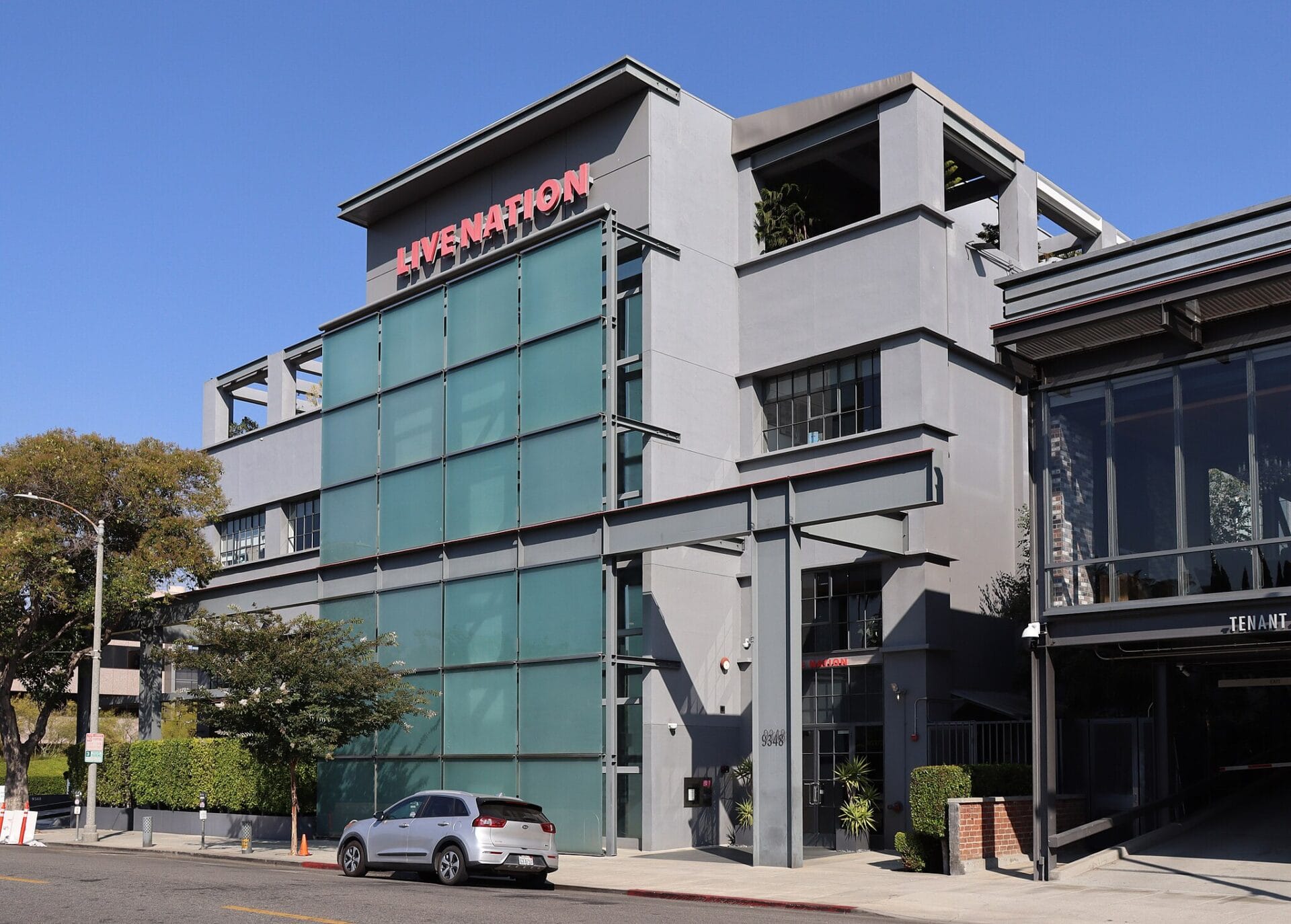
Coolcaesar, CC BY 4.0, via Wikimedia Commons
A federal jury has found Live Nation liable of operating as a monopoly in live event ticketing in violation of federal and state law. After several weeks in a Manhattan court and four full days of deliberation, the jury ruled in favor of the plaintiff states on all three monopoly counts: monopolizing live event ticketing, controlling a dominant share of major concert venues/amphitheaters, and illegally tying its content promotions and venues. The consequences of the closely-watched case’s verdict will be determined in remediation proceedings by Judge Arun Subramanian
“It’s a great day for antitrust law, it’s a great day for consumers, and this case is a tribute to the 34 states and the District of Columbia who carried this case forward,” Jeffrey Kessler, chief counsel for the plaintiffs, told reporters outside the courtroom, per Big Tech on Trial. “It was my great honor to be working together with everyone on this.”
Filed in 2024 by the Biden administration’s Merrick Garland-led Justice Department and 39 states, Live Nation’s antitrust lawsuit initially sought to separate the entertainment giant from its Ticketmaster subsidiary, with the attorney general explicitly declaring that the company engaged in “unlawful, anticompetitive conduct to exercise its monopolistic control over the live events industry in the United States.” On March 9, less than one week into the complex trial, the Justice Department reached a settlement that senators including Amy Klobuchar, Elizabeth Warren and Cory Booker “point[ed] toward a deal made in response to political pressure rather than the public interest.” The Wall Street Journal reported that President Trump had personally pressed the DOJ for a quick resolution in response to overtures from the direct overtures from representatives for the company.
Trial resumed after a week-long interruption when more than 30 state plaintiffs took up the case without the DOJ antitrust division’s leadership, quickly enlisting distinguished antitrust lawyer Kessler as lead counsel. Kessler prepared his case in just days and argued that the entertainment giant employed anticompetitive and retaliatory practices, forcing venues into long-term exclusivity contracts with Ticketmaster, requiring artists to work with Live Nation to book at their amphitheaters and creating a negative experience for fans by cornering the primary ticketing market.
Some of the most salient evidence presented to the jury – as indicated by comments from the foreperson – included CEO Michael Rapino’s agitated call to the former CEO of Barclays Center regarding the venue’s switch to Stubhub, messages in which Live Nation executives bragged about “robbing them blind, baby” and internal data that showed fan satisfaction with Ticketmaster had dropped to 1% in 2023.
Beyond ruling against Live Nation on all counts, the jury also accepted the plaintiffs’ theory of harm, finding that consumers had been overcharged $1.72 per ticket on average. This figure will inform the monetary damages Live Nation will be ordered to pay to the participating states and the District of Columbia in Subramanian’s determination. In the DOJ’s settlement terms, still subject to review under the Tunney Act, the company had agreed to pay $280 million in damages, and Live Nation’s response to the jury’s ruling suggested that the company believes Subramanian’s calculation would not exceed the previously proposed figure.
”The jury’s award of $1.72 per ticket applies to a limited number of tickets—those sold at 257 venues, which represent about 20% of total tickets—and only to purchases by fans (excluding brokers) in certain states over the past five years,” the company wrote. “Based on that scope, we believe the aggregate single damages figure would be below $150 million, which would be trebled. In connection with the DOJ settlement, Live Nation has already accrued $280 million toward state damages and civil penalty claims.”
The Justice Department’s settlement would also require Live Nation to implement structural changes to its business model, including a cap on service fees at 15% of a ticket’s face value at amphitheaters, a four-year limit and competition carveouts for Ticketmaster’s long-term venue exclusivity contracts and divestment from more than 13 of its major amphitheater ticketing agreements. Subramanian may determine that the case requires a resolution in line with the DOJ’s original call for the reversal of Live Nation and Ticketmaster’s 2010 merger, or other limits to its flywheel model.
National Independent Venue Association (NIVA) Executive Director Stephen Parker responded to the jury’s ruling with a message recognizing the victory and calling for a remediation framing to restore competition to the live entertainment industry. “Today, the jury confirmed what artists, fans, and independent venues have believed for 15 years: Live Nation is an illegal monopoly,” Parker stated:
“The consequences should be swift and disruptive to their vertically-integrated market power. Live Nation and Ticketmaster must be broken up now. Ticketmaster should not be permitted to participate in the ticket resale market. Live Nation should not be able to promote more than 50% of artists’ tours. And the damages paid to the states should be remitted to the independent venues, promoters, festivals, and fans that have suffered under Live Nation's monopolistic reign over the last 15 years.”