***
As Umphrey’s McGee celebrate the release of their latest album Blueprints, their new drummer opens up on his 20-year journey from The Jammys to the career-defining offer to join one of his favorite bands for “JaJunk.”
That Thing You Do
SCOTTY ZWANG: I grew up in Commack, N.Y., on Long Island, about an hour outside of New York City. Music has always a big part of my life—first as a listener and then, when I was 8 or 9, I started showing an interest in wanting to play the drums. It was, embarrassingly enough, around the same time That Thing You Do! came out and I was mildly obsessed with the movie, wearing shades and the drummer character. My parents got me a drum pad to mess around with, and I played at summer camp—all the counselors loved that I listened to Dave Matthews Band and some of these other bands. And, when I was 9, I got a drum and performed “That Thing You Do!” at my fifth-grade talent show, and it all spun o¢ from there.
My dad was very into the Allman Brothers and classic-rock music from the ‘60s, ‘70s and even the ‘80s—we were listening to that constantly in the house, whether it was Clapton or Steely Dan and those types of bands. I developed my own love for music in the mid-‘90s through what was being played on MTV and the time period before that. Nirvana, Soundgarden, Green Day and a lot of alternative-rock and punk-rock from the ‘90s was my upbringings. And then, in 2002, my brother took me to see Soulive at Irving Plaza [in New York] and it opened up my entire world. The only jam music I knew at that point, besides the Allman Brothers and Phish—who my dad was listening to around ‘94, ‘95—was The New Deal.
After that Soulive show, I became a full-on jamband hippie, and that continued for a while. I had found out about Wetlands right before it was closing in 2001, when my brother and his friends went to see God Street Wine’s final show there.
The Jammys
SZ: In 2005, things fully changed for me. A friend of mine that I worked with at my dad’s medical office saw me with my Coventry shirt on and was like, “If you’re into this kind of music, then you should come with me to The Jammys at The Theater at Madison Square Garden.” That is where I saw Umphrey’s McGee, the Benevento-Russo Duo and a few others for the first time, though those two really grabbed ahold of me. I was a senior in high school and started traveling to see as much music as I possibly could, which led to my dropping out of college in 2006 to pursue music and tour full-time with an alternative rock band I was in called Code Anchor. It was nothing too glamorous and mostly regional but getting to play music every weekend was everything I ever wanted. It became clear that this was what I wanted to spend the rest of my life doing—drumming and playing music.
That band came to a head in 2009, when one of our members left the band to go to California and pursue the dream we had all talked about—he was tired of talking about it and wanted to just do it. I went to the Rothbury Music Festival that summer as a guest of the Disco Biscuits, who I had been seeing pretty religiously since 2005, and that festival opened up my world to what life could be if I played drums in the scene that was my passion. As much as I grew up seeing alternative-rock music and came from that MTV age when rock-and-roll was still a thing, I realized I should be in a jamband. At the same time, live electronic music was really starting to take off with groups like Pretty Lights and Big Gigantic forming and starting to do their thing. And within six months of that, I joined my first jamband, the livetronica band Sonic Spank out of Philadelphia.
From there, I’ve lived the life of being in this band or that band [for a period of time] for the past 15 years. Fortunately, every two or three years, it felt like a major Music Festival that summer as a guest of the Disco Biscuits, who I had been seeing pretty religiously since 2005, and that festival opened up my world to what life could be if I played drums in the scene that was my passion. As much as I grew up seeing alternative-rock music and came from that MTV age when rock-and-roll was still a thing, I realized I should be in a jamband. At the same time, live electronic music was really starting to take o¢ with groups like Pretty Lights and Big Gigantic forming and starting to do their thing. And within six months of that, I joined my first jamband, the livetronica band Sonic Spank out of Philadelphia. From there, I’ve lived the life of being in this band or that band [for a period of time] for the past 15 years. Fortunately, every two or three years, it felt like a major shift—Sonic Spank fell apart and then I found myself in a few other projects before joining Dopapod, which took over the next three years of my life. And when that fell apart—at least for me—and they brought back Fro to drum for them, it took me about a year or so to get myself back on my feet. But I decided to move back to Philadelphia, and that’s when I sat down with Tom Hamilton and we discussed forming Ghost Light, and that became my whole life for the next two or three years. His band American Babies was starting to fade away a little bit, and he wanted to start a band again—a band where we all had our own voice and we could all collaborate with each other. American Babies was really Tom’s thing, and he hired musicians to play all the parts. [Zwang’s pedigree includes time in American Babies, RAQ and Conspirator, among others.]
After that, I found myself in the interesting position of not having a band or a touring life, which had been my world at that point for 10 years straight. Then, I randomly ended up getting a phone call to do some shows with The New Deal on Jam Cruise, which is kind of where it all started for me in 2001. It makes you realize that, as big as the world is, it can also seem very small and connected.
This Is Live
SZ: When I was graduating from middle school and going into high school, a mutual friend, who later became a really good friend, Glenn Morrow, introduced me to The New Deal. We were hanging out at his house with a bunch of people. They had New Deal music playing and I thought it was a DJ or some producer playing electronic music. And, all of a sudden, someone started talking about the band and I was like, “Wait, this is a band and that’s a drummer?” It completely opened up my world—the possibilities of bringing instruments into an electronic world—because, at that point, a lot of people weren’t really using live instruments for electronic music. Then, in 2006, I discovered this drummer, Johnny Rabb, who now plays with Collective Soul. I saw him playing this new instrument, the Roland SPD-S sample pad. Now a lot of people play it but, at the time, it was a brand-new product from Roland. I became obsessed with this video and showed it to some of my friends who were really into electronic music. One of them was like, “You gotta check out my buddy, KJ Sawka.” So I discovered live drum-and bass music and the possibilities of what you could do with a drum kit in a realm that typically is electronic and programmed. Magically, KJ was playing New York and needed a drum kit, and a friend of a friend called and said, “Hey, I hear you’re a fan and have a bunch of drum gear. Would you want to provide some drums for KJ Sawka?” Without hesitation, I said, “Of course.” I had already been a fan of the Disco Biscuits, but [Disco Biscuits drummer] Allen Aucoin was a huge KJ Sawka fan and showed up at that gig and we became friends. So my world of following the Disco Biscuits around turned into being friends with the band—on the guest list and hanging out backstage and meeting all these different people. I also worked as a drum tech for people like KJ and Billy Rymer, the drummer for this hardcore band The Dillinger Escape Plan, and that was where I was when I went to Rothbury— not to work but to hang.
I ended up moving to Philadelphia around then as well. While at a Camp Bisco, I met Ian McGuire, who was a Philadelphia-based musician that, at the time, was in a band called the MJ Project. He was also playing in a side-project with Allen and Clay Parnell from Brothers Past called CIA. He mentioned how he was gonna start this new project with one of his bandmates, Ben Karp, from MJ Project and that they were going to be auditioning drummers—I happened to be the first audition. By January or February 2010, I joined that band, Sonic Spank, which became my life—I met all these Philadelphia musicians and the city really kickstarted my career. So I’ve always viewed Philadelphia as my home base, even though the New York club scene—like Arlene’s Grocery, The Knitting Factory and Sullivan Hall—was still a thing and where bands got their start. Lotus, the Disco Biscuits and Brothers Past were all based out of Philly, and it trickled from there. I loved this music and would do anything to be part of the scene, and it was about being in the right place at the right time, every step of the way. Within three or four years of The Jammys, I got to meet all of these people that had flipped my world upside down in the best possible way and I went from being a fan to a peer—I was doing things I loved and able to pay my bills. It wasn’t like I was putting away tons of money or anything, but I was doing the thing and living the dream.
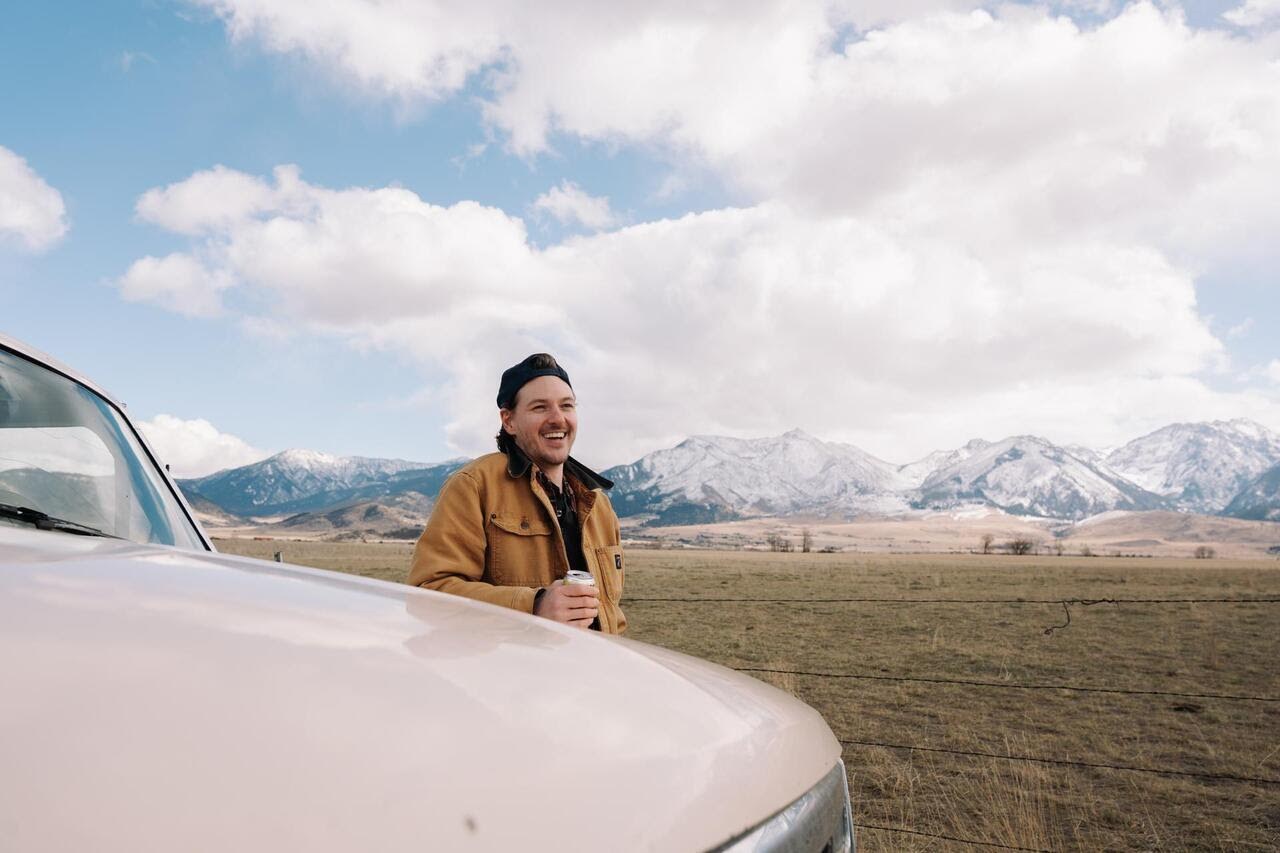
photo: Abbey Fox
Baby Steps
SZ: There were a lot of baby steps along the way from seeing Umphrey’s at The Jammys to where I am now. It was at that Rothbury in 2009 where I first met them. I had a quick interaction with Ryan Stasik. But it was Jake Cinninger that I really started shooting the shit with. When I mentioned being a drum tech for The Dillinger Escape Plan, he was like, “You got to meet our drummer Kris [Myers],” and it all started there. Then when I was in Dopapod, we had the opportunity to play some shows with Umphrey’s in the fall of 2014 and that’s where I got to know those guys a little bit more and their organization— I got closer with their drum tech and tour manager.
In 2023, when I had the opportunity to play Jam Cruise with The New Deal, Umphrey’s were also on the boat, and Robbie Williams, their longtime guitar tech who was also their drum tech at the time, said to me: “For years, I’ve seen you on the side of the stage and you’re always air drumming and you know all these songs. If we ever need a drummer for anything, we know who to call.” And it was nine months later when I heard that Kris was having surgery, and they needed a bunch of drummers to f ill in. I had been invited to do a full show with them, but we got some of the dates mixed up and I had something on the calendar the same date I was supposed to play with them. As much as it was a dream opportunity, it didn’t feel right to cancel the gig that I had, and I felt like this chance had slipped away. But they were playing at Mishawaka in Colorado, where I live now, and I was like, “I was thinking of coming down to the show and checking it out. I’ve never been to the venue, and I’ve always heard amazing things.” That’s when they extended the invite and I guess they really enjoyed it.
I was very strategic about the songs I wanted to play and how to go about it—looking at the setlists that they’d been doing with these guest drummers and some songs that people have been avoiding, whether it’s cause they’re really challenging to play or another reason. I guess it worked. So when they needed a drummer full-time after Kris decided to leave this year, they gave me a call. It took 16 years of knowing a bunch of the guys, and all these moments coming together, for them to say, “I think Scotty can do the job. He knows a lot of the material, so it won’t be as overwhelming.”
When I talked to them about filling in two years ago, they asked me to pick 12 songs and I was like, “That’s difficult from a fan perspective—here’s 25 songs.” I have some pretty big shoes to fill. Kris, technically speaking at the very least—if not for all the reasons—is one of the greatest drummers in our scene. But, without knowing it, I have been preparing for this for 20 years.
Strategic Setlist Choices
SZ: When I sat in at the Mish, I ended up only playing four songs. Ben Atkind was also doing those shows and I picked “JaJunk” and “Hurt Bird Bath,” knowing that no one else was attempting to play those songs. And then I picked the first song I ever saw them play, “Women Wine and Song” and “Heart and Soul,” which I saw them play with Huey Lewis at The Jammys. I thought it was a big full-circle moment to do those two songs with them. Kris ended up coming back, but I also played a song with Umphrey’s McGee [in 2024] at Summer Camp, when moe. had to pull out for a family tragedy and they did an Umphrey’s and Friends set, and I sat in with them at The Capitol Theatre in Port Chester, N.Y. and The Paramount in Huntington, N.Y. [earlier this year]. So there were all these little glimpses of what things could become and, thankfully, this is the dream opportunity of a lifetime.
My strategy going into the initial setting was looking at this giant list of songs and then playing all of them and seeing what makes sense. I knew a good deal of the music already. But, when I got the call, I realized how much of the music I had missed out on since my career really started and I needed to stop listening to these other bands and focus on my own career. So, thankfully, I had a good chunk of everything they wrote from the beginning of their career through 2009-2010 floating in the back of my brain, but I needed to learn everything that they’d done since then.
When I got the call to join this April, I had a SunSquabi tour that was going directly into working with Tom Hamilton. They asked me what my schedule was like and, somehow, it just linked up that I was completely available for the shows they were looking at in May, June and July.
It definitely blew my mind and I was a little taken back—my intro to the band and what I really fell in love with, as a drummer, was Kris’ virtuoso playing. It was like, “I can’t believe this band exists.” As someone who was new to the jamband scene at the time, it brought my entire world of music into this one bubble that was Umphrey’s McGee. Also I was definitely a little intimidated to not only be replacing one of my favorite drummers, but also to be in a band with a musician like Jake, who’s always been one of my favorite guitar players. They are all incredible musicians. So I was scared but wasn’t going to miss this opportunity.
Proposals
SZ: When they initially asked me to join the band and said, “Do you want to do this full time,” I was like, “Of course, but I’ve been in a band that I loved before and gotten kicked out and I also know that I have huge shoes to fill. For my own sanity, let’s just go into it like I’m gonna do the year and we’ll see where things go.” So, getting invited on stage and proposed to in front of everyone at a show [in Peoria, Ill., on Aug. 14] wasn’t a complete shocker. Still, I was like, “OK, this is happening now.”
I try not to be overwhelmed by it all and just listen to the 80-90 songs I know we are going to play and go from there. Thankfully, the guys are easy to work with, amazing human beings and extremely talented musicians. At first, they told me, “We can repeat stu‘—don’t worry about it.” But as a fan of the band, and especially the scene and what makes it so unique, I said, “We can’t do that. We need to play a different set every night and try not to repeat things during a run.” I want people to come out and feel that there’s this new, different sound happening with a new musician on stage, but that it still feels pretty much like an Umphrey’s show. So while it was overwhelming, I had to remind myself that I am meant to be here and super fortunate to be in this situation, and I’m not gonna take any of it for granted. I need to work super hard to make sure the integrity of the band remains while also making sure who I am as a person doesn’t get lost. It could not only be stressful to try and mimic Kris but also almost impossible.
There wasn’t really a pep talk when I joined the band. Kris was the first person in the band I really go to know and, as a drummer, the person I was closest to in the beginning and the only one I was really friends with going into this. So it was an interesting and weird situation to be in. But, ultimately, there was just a lot of love and support for whatever the future was gonna bring. I have nothing but love for Kris and wish him the best of luck in his future endeavors, whether he ends up joining a band or continues the session work he does. He’s a beast of a drummer, so anyone that has him, whether it’s on a recording or on a tour, is very lucky. I didn’t have that much time to prepare for this tour so, once again, it was playing the game of, “OK, I’ve got a lot of work to do, and I need to do as much work as possible without overwhelming myself with the tasks at hand.” For me, it almost equals learning a new song a day. In terms of writing the setlist, the f irst day of tour, we look at the week, all of the songs and where we want to add the two or three new songs we are adding every show—and, by new, I mean new to me with Umphrey’s. Then we look at the setlist from the previous times they played there and what other songs we can throw onto the list. Once a list of songs is made for each day, then we can look at the setlist a little more, and I would say it’s usually me, Joel [Cummins] and Brendan [Bayliss] sitting down and seeing what works and getting the recipes right. They’ll say, “OK, well, we need a Jake vocal tune and this instrumental here, and we need another vocal tune there.” Or they will ask, “What two covers do we want to maybe throw on the list for the night?” Every morning, or at least by noon or 1 p.m., we try to have the setlist made so that, when we’re at the gym or whatever it is that we’re doing that day, I can spend the next couple of hours listening and reviewing before we have soundcheck. Thankfully, there’s a rehearsal room backstage to hash out anything that we didn’t get to at soundcheck or any trouble spots in a song. And, luckily, we improvise a good chunk of the time we are out there. Every once in a while, they are like, “Hey, can we add this song? It’s pretty easy. I think you’ll be able to learn it,” which has happened three or four times before—I’ll listen to something for a couple hours and then the f irst time I’m really playing it is for 1,000-2,000 people.
Blueprints
SZ: When I got the offer to join, one of the things that I looked into was knowing that this new record, Blueprints was gonna be coming out and looking at all of the setlists over the most recent shows and picking out which of those six new songs seemed to be more in rotation. “Den,” “Out of Focus” and “Concessions” were the new songs they seemed to be playing most frequently, so I picked those to work on first. “Den” had a more straightforward feel, so I did that one first, and “Out of Focus” was one of the ones they refer to as having Lego pieces and these more involved pieces, so I did that one next. “Concessions” had the most parts and was a long piece of music, so I did that one third. But I still wanted to sound like myself and not be a watered-down version of Kris, Joe Russo, Adam Deitch or any of these people from the scene who are the best at their specific style. I’m playing to my strengths but luckily, that a big part of my DNA is Kris’ style.
In terms of the new album, and these Lego pieces, when they are writing music, someone might have an idea and, as they are playing along, someone else in the band might be like, “I’ve got this piece that I think will go really nicely with that,” and they will piece ideas together like Legos. With this album, they’ve taken that concept and used all of these ideas that they’ve developed on stage during these improv sections going back to 2006, and they’ve come up with new songs. They have sections in the live show they refer to as “Jazz Odyssey” or “Jimmy Stewart,” and a “Jimmy Stewart” section is more like writing an actual song on stage. Brendan will sometimes even improvise lyrics on the spot.
So they took these Lego pieces from almost 20 years and developed these six new songs. And when you see the tracks on Spotify, you can see those sections laid out and broken into different sections. It’s a very unique and interesting approach to writing songs, whereas most people assume that someone comes up with a song idea or a band is sitting together and they work on this piece of music either in a day or a week or a month. So the first single, “Out of Focus,” is 10-12 minutes long and broken up into five Lego parts. It’s very Umphrey’s McGee of them.