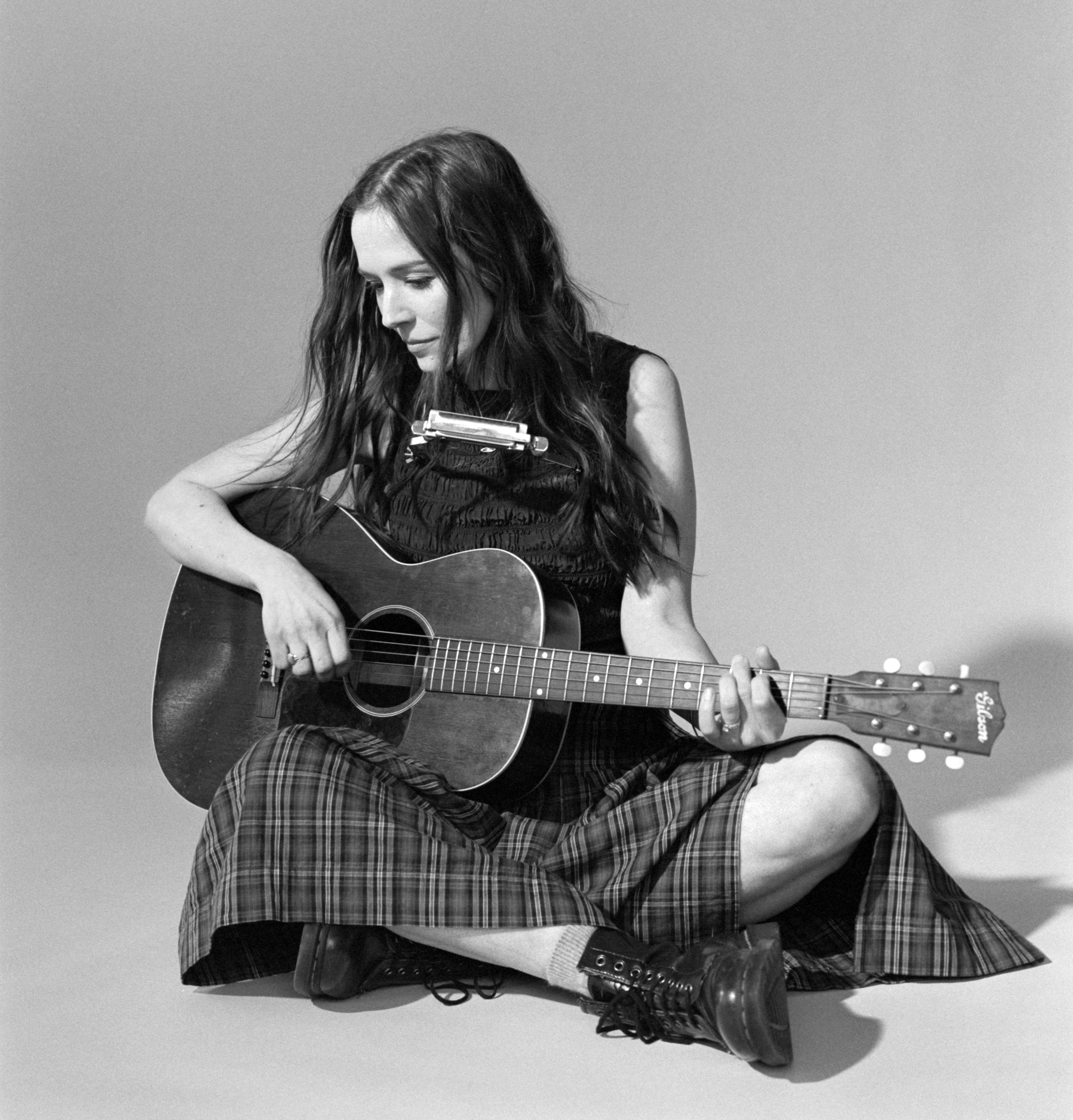
Even when she was a little girl, Rachael Price dreamed of being a jazz singer when she grew up. Immersing herself in the recordings of Ella Fitzgerald and other belters, Price—who was born in Perth, Australia, in 1985 but raised in Tennessee—studied the genre and eventually attended the New England Conservatory of Music.
“That was it for me,” she says now. “I was going to graduate, get out of school, just be a jazz singer.”
But you know how it goes with the best laid plans. Instead, she and a few fellow NEC students formed a band in 2004 that they called Lake Street Dive—one that merged elements of soul, pop, Americana, rock and a bit of jazz— with Price providing lead vocals. It took them a while but by the mid-2010s, they’d become a formidable concert draw and their recordings consistently garnered impressive attention: Their 2018 album Free Yourself Up made the Billboard Top 10 while last year’s Good Together nabbed a Grammy nomination for Best Traditional Pop Vocal Album.
Yet, even as Lake Street Dive continued to enjoy success, Price still longed to sing jazz. “I had strayed from it,” she says. “I didn’t sing any jazz for many years after I left school, until I asked Vilray if we could play some music together. It’s been my return to the style that I was working on.”
It was a smart call. Vilray is the single moniker by which the New York City-based Vilray (pronounced Vil ree) Bolles, a guitarist, singer and songwriter, performs. He and Price also met at NEC in the early 2000s, bonding over their shared love of mid-20th century pop jazz stylings. They started collaborating, playing mostly original songs by Vilray in the mode of 1930s and ‘40s jazz—with a few period covers tossed in—and released their self-titled debut album in 2019. I Love a Love Song! followed in 2023, and West of Broadway, the duo’s latest, came out earlier this year via Concord Jazz.
If the first two felt like Price and Vilray were still finding their way, then the new effort is where the pair become comfortable in their own musical skin. Nine of its 10 songs are Vilray-written; one, “Off Broadway,” features a guest vocalist, a certain fellow named Stephen Colbert who has long been a fan. The final track and the only cover in the set, “Manhattan Serenade,” is nearly 100 years old.
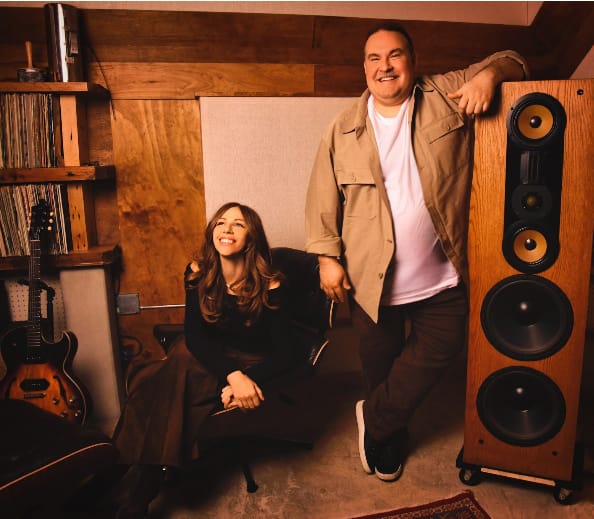
West of Broadway was produced by Dan Knobler, who not only sat at the helm for the first two Rachael and Vilray albums but also some of Lake Street Dive’s key works. Jacob Zimmerman arranged the tunes, which feature a tight band spotlighting vibraphonist Warren Wolf in lieu of piano on most tracks. The music was recorded in New York City, in a cozy studio— yes, it was west of Broadway— that had Vilray’s preferred old analog equipment on hand.
This time, Vilray looked toward the cool jazz of the 1950s for inspiration—Chet Baker, Gerry Mulligan, Zoot Sims—as well as the world of Broadway musicals. His songs are cunning lyrically, ever-clever, but packed with emotion and passion—and always a‘able musically. His attention to detail is sharp, and his skillset as a storyteller is remarkable: On the album’s second track, “Is It Jim?,” for instance, the narrator wonders what one might feel if he or she awakened to find a tortoise in place of a lover. The imagery in all of the songs is vibrant, and throughout, Vilray’s guitar work is elegant and imaginative; Price’s nuanced vocalizing and the band’s sympathetic accompaniment make it all quite memorable. Vilray often conversed extensively with Price before they attempted to hone his ideas, to ensure that they were on the same page.
“People get really obsessed with the idea of originality and deny that they are creatures of taste,” he says. “But originality can come from putting two strange ideas that aren’t actually bedfellows together and trying to live in that space. I wanted people to have the experience of feeling like they were being dropped into the middle of a story.”
He and Price were careful not to mimic their source music, however. “You want to come across as the interpreter of a song,” Vilray says, “as though it always existed.”
“It’s refreshing for me,” adds Price. “It’s nice to experience a style of music that feels very familiar to people, but then they get to form a new relationship to it because they haven’t heard the song before.”
For Price, working with Vilray on a set of songs so unlike the music of Lake Street Dive is quite rewarding. “It’s just a very different level of energy,” she says. “It’s a quiet show. I sing at half the volume that I usually do. The majority of the things that I do in a Lake Street Dive song are not stylistically appropriate here; I have to shed those things. So it’s been kind of a journey for me to find that part of my voice again.”
The paired performers fill in musical gaps for one another. “Vilray is an extremely thoughtful musician,” Price says of her collaborator, “and really pure. He’s just doing it for the sake of beauty and art. And that, actually, is a hard thing for musicians to do because we have the audience in mind and the bottom line in mind. Will it be accessible? Will people listen to it? When Vilray sits down to write, he doesn’t think about that stuff.”
Vilray returns the compliment. “These are weird songs,” he admits. “And it’s wonderful to write them for her. She’s extremely open and funny, extremely generous and bright and devoted to a good musical sound. She’s just trying to get to the most beautiful thing in the most joyful way.”