Lukas Nelson Turns The Page
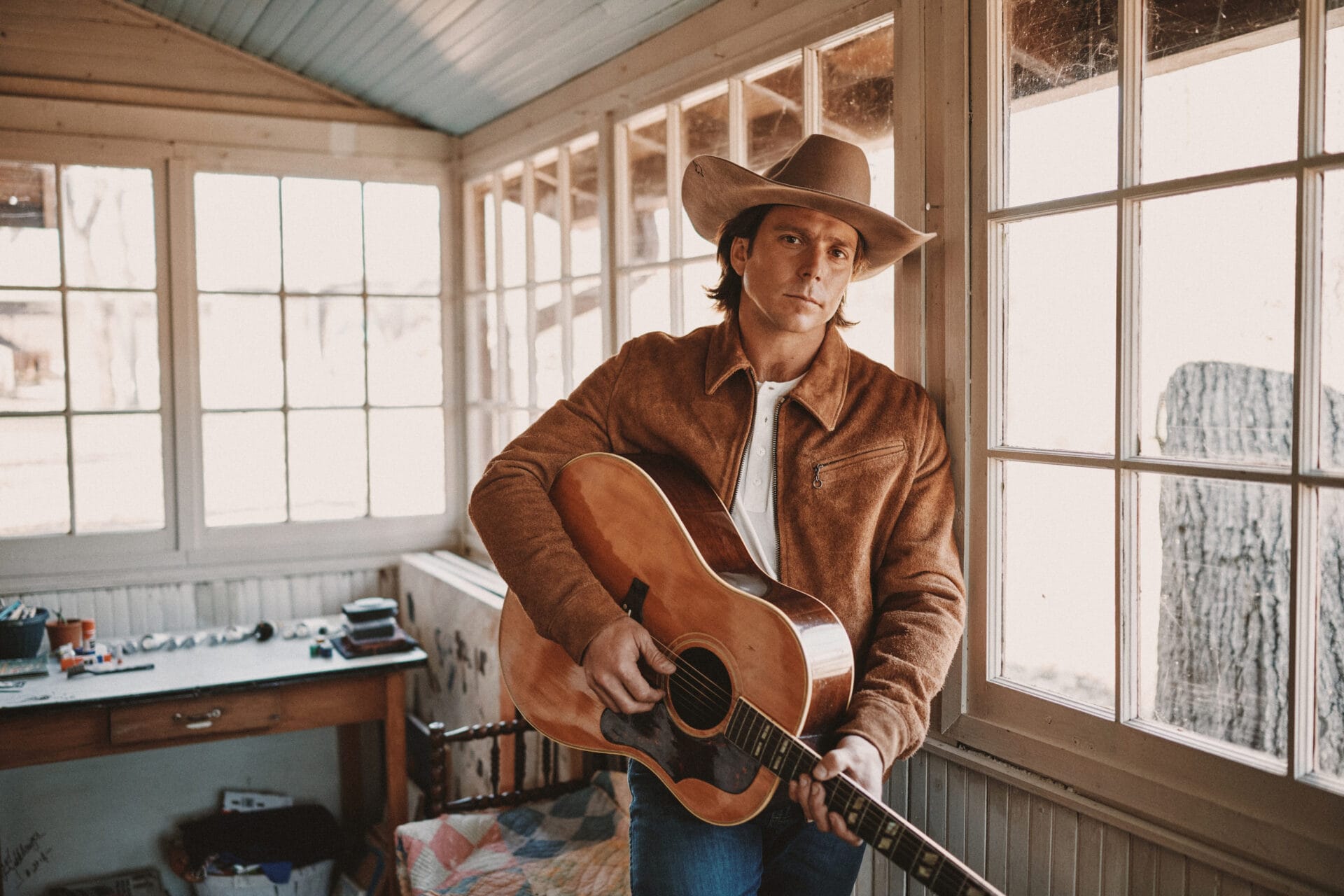
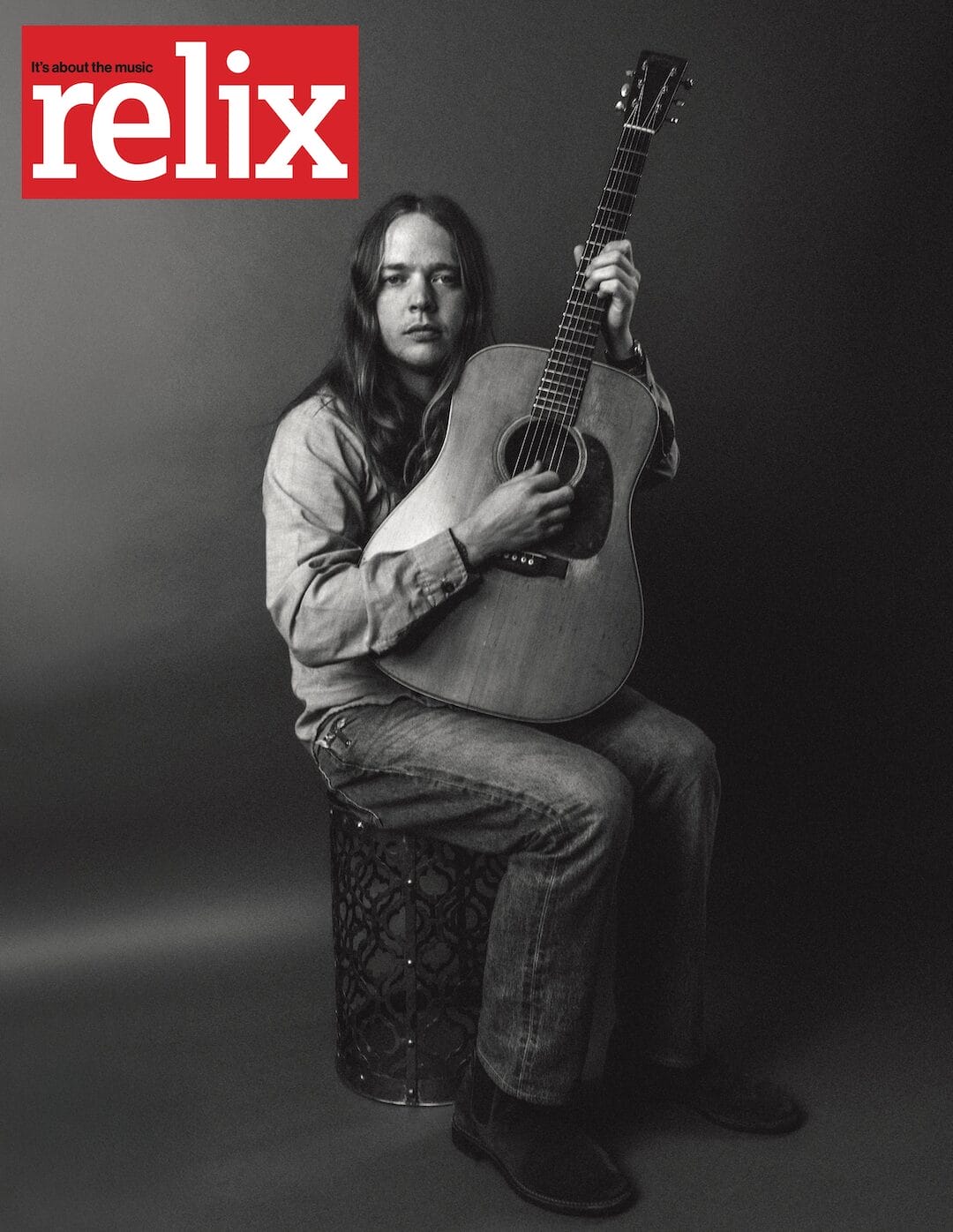
photo: Matthew Berinato
***
Lukas Nelson’s American Romance is his ninth studio album, yet it’s also his debut. After making eight records with Promise of the Real, beginning with their self-titled effort in 2010, this is the initial release credited solely to his name.
That’s not to say American Romance is entirely a solo effort. While the prolific songwriter crafted all the tunes and appears on guitar, piano, banjo and vocals, he is joined by such illustrious company as pedal steel master Russ Pahl, drummer Matt Chamberlain, fiddle player Eleanor Whitmore, POTR bassist Corey McCormick and Marty Muse on Dobro. The album’s producer, Nelson’s longtime friend Shooter Jennings, also plays synthesizer. Two tracks feature guest singers, with Sierra Ferrell and Stephen Wilson Jr. making memorable contributions.
All told, American Romance is many things. It’s a travelogue, a creative exploration, a personal meditation and a mission statement. It’s also a triumph. The record showcases Nelson’s warm voice and range of perspectives—both sonic and narrative—drawing on new material before concluding with “You Were It,” his earliest composition, which he wrote at age 11 and father Willie recorded on 2004’s It Always Will Be.
“I really wanted to focus on songwriting with this album,” Nelson explains. “In subsequent projects, I’ll have time to explore all the different parts of myself, but I wanted to get down to the root of who I am for this foray. When you strip me down to what I do best, it’s writing songs. Singing and playing guitar come second as an accompaniment, but I think of myself as a songwriter first and foremost.”
Was there a particular musical idea or overarching goal that led you to record this record without Promise of the Real?
I just wanted to play my own music and sing my own songs. Promise of the Real was a band since 2009. Then, when Neil Young took notice, we ended up becoming his backing band for a long time. So we had to split our time between playing our own stuff and going out with Neil, which I also loved doing.
Eventually, though, because I was the songwriter and the creative force of Promise of the Real, it became more important to me than the other guys to keep playing my own music. Neil kept wanting to go out and it was taking me away from my projects. So I felt like I owed it to myself as an artist to give myself the greatest chance to have my own audience. I also wasn’t getting any younger, and I didn’t want to spend all of my time playing with Neil.
I wanted to do my own thing, and the other guys were happy to do both, but I just couldn’t do that. I decided that I can’t keep trying to switch between tours—I need to focus on my own music and my own tours. So the Promise of the Real became Neil’s band, and I made my own music my main priority.
Corey is still playing with me as much as he can, although he does get taken away by Neil sometimes, and I find that to be beautiful thing. I introduced them to Neil and I’m happy that they got to know Neil through playing with me. So it’s all wonderful.
Did you originally envision the batch of songs that you recorded for American Romance with a fiddle and a more pronounced pedal steel?
For each song that I did, I tried to only have the instrumentation that was serving the lyrics and supporting the concept of the song. With everything on this album, I wanted to do the least amount. I didn’t want to do anything that would take away focus from the lyrics and the melodies. That was important to me. It was a very conscious effort.
I wanted to do a stripped down songwriting record, but there’s still some exploration and guitar work that I’m proud of. The instrumentation on a song called “Make You Happy” has got a Paul Simon vibe mixed with some Motown, and I like what I did with the introductory guitar riff.
Then on “All God Did,” I had a little exploration on the guitar, but I wanted to keep that minimal because I’ve done eight records with that kind of thing. I’m in a place now where I’m focusing more on my songwriting, particularly for the first record that I did on my own.
When you released Sticks and Stones in 2023, you decided to make that record upbeat because your prior album, A Few Stars Apart, had been more introspective. Knowing that you have a Dropbox folder with a few hundred original songs, what did you have in mind when it came to selecting the material for American Romance?
It’s a love letter to the country that raised me. It’s the idea that I grew up on the road and I couldn’t really give a straight answer when people asked me where I’m from.
I’m at a Buc-ee’s right now. I’m heading to up to Allentown, Pa., and I’ll be stopping at a diner to get lunch. This is kind of where I was raised, with all the grain silos, gas stations and Walmart parking lots. I wanted to have something that showed the countryside and showed the urban side of the country that raised me in a real personal way, told in love stories and memories.
The title track feels like it works on a couple levels because the song seems like it’s about an interpersonal romance, but there’s plenty of imagery that also evokes the surrounding environment.
There’s a romance to the bleakness as well. There’s a romance to the trash that blows along the sidewalk at midnight in New York City. There’s a romance to the mobile home along the river. There’s also a romance to the grain silos and the fields of wheat and corn. There’s a romance to all of that, and I tried to capture it.
There’s also a sense of life’s fragility and impermanence that seems to run through the album.
I’m always reflecting on that. There’s always that contemplation of mortality with all of my music, even going back to “Set Me Down on a Cloud.” I feel like, thematically, there’s always been a touch of stepping back out of oneself and looking at life in the truest perspective, where you see its impermanence and you have to accept it.
You just performed “Set Me Down on a Cloud” on the opening night of your current tour, along with a variety of new songs and compositions that you first played with Promise of the Real. Given the scope of that material and your wide-ranging interests, was it challenging to winnow down all the potential musical approaches in order to make that initial statement with American Romance?
No, because my intention was that the record would reflect how I’m feeling right now. Creating an album is like writing a book about the chapter of your life that you’re in or whatever you want to talk about in your life.
I’m an author, so I pick a theme, I pick a story that I want to tell and then I pick the songs. If I have ‘em all, then I’ll put ‘em down. If I don’t, then I’ll write more. I have plenty more books to write. They’re sort of sonic tellings of my time here.
Can you talk about the starting point for the song “Outsmarted,” which has quite a few turns of phrase, like “Manifested destiny” or the line that references Don Draper from Mad Men?
I was sitting in a truck with my buddy Matt, who’s one of my best friends in Maui, and he said to me: “Man, sometimes I have to listen to your music a bunch of times to really get the subtle things that you say with your lyrics, and sometimes it goes over my head.” It made me want to write a simple song with lyrics that, the more you listen to them, the more you think, “Oh, that’s funny.”
I really like a haiku. I like a short poem. I like a short story. I like trying to say a lot with a little space. I like having a simple coating with a complex internal content. I liked the idea of doing a simple sonic structure with “Outsmarted,” where it’s pretty much a straight-up country, almost bluegrassy kind of vibe with a lot of introspective lyrics that make you think. But then it all gets tied together with things like, “I managed to outsmart myself,” which sort of acknowledges that at times maybe I can get caught up in writing something so dense that people will figure it out later, which is just fine.
Speaking of moments in time, was there something that led you to work with Shooter on this record?
Shooter sent me a note. He had been watching something that I was doing, and he got inspired and said, “Man, I really feel like this is the time.” I agreed 100%. I thought, “This is the perfect time.” So we did it and it was really easy.
We see eye to eye musically or ear to ear, if you will. I really love the way he thinks as a producer. He’s a brilliant producer and a brilliant musician and grew up in the same environment I did, but he was also influenced by his own generational music. So with our powers combined, we’re a pretty good team.
Can you describe the song or moment on American Romance that initially occurs to you when you think back on his contributions?
When we first got in there, we did “God Ain’t Done” and he called in Eleanor for the fiddle. Man, when that fiddle comes in on the chorus, it takes the song to this place. I was really excited when that song took shape the way it did, and Shooter had all these other great ideas that I thought were brilliant. That’s the one that sticks out the most, just because it was the first song we did together, and from that point on, we knew that we were going to have something special.
As you just mentioned fiddle, Sierra Ferrell came to mind, although she doesn’t play that instrument on the record. When you wrote “Friend in the End,” did you hear a second vocalist or even her specifically? Also, when you invite Sierra or Stephen Wilson Jr. to record with you, invariably, that’s going to help expose their music to your listeners. How conscious are you of that?
I always want to help out my friends and fellow musicians. I feel like a rising tide lifts all ships, and I have artist friends of all different genres that I try and lift up and support where I’m talking about them. I feel like, if I could only talk about other artists, then I would.
I think Sierra’s one of the great voices of our generation. We sing really well together, and I was so happy to have her on the album. But, no, that song wasn’t necessarily written for a second vocalist. How it came together was she was listening to the album and she gravitated toward that song, so we said, “We’d love to have you on there.”
Then, as you mentioned, Stephen Wilson Jr. is the other collaboration with “Disappearing Light.” He’s another one of those really unique and brilliant musicians that I immediately clicked with, so I was really happy to have him on the record.
There’s a moving moment in the chorus of “Disappearing Light,” where you sing, “I fear the disappearing light is mine.” It leads the listener to recalibrate a bit. That song came from a poem I had written. I sent it to Stephen Wilson, and we worked on it together at my house. We write really well together, and I like how it flowed. He’s got a great mind for lyrics. I love the line “Highway hallelujah burning diesel in the sky”—just the idea of this tour bus on fire careening like a meteor through time. That’s been the last 10 years of my road life, so it’s very fitting. I love the way that song came together.
In thinking about your various musical interests, you’ve shared your recent efforts to learn the music of Django Reinhardt. You also were at the Blue Note recently to see Julius Rodriguez. Can you talk about how those experiences might find their way into your own music, whether directly or indirectly?
Well, they both remind me that I have a lot to learn. With Julius Rodriguez, those musicians are top tier, and it’s great to absorb that and to feel inspired by it. That makes me want to get down on my guitar and woodshed. Speaking of Django, I’ve been studying his solos for the last six months and really trying to learn that stuff. You’re always a student with music. There’s always something to learn.
I’ve seen clips of that Julius Rodriguez show where Ekep Nkwelle joins in, and it’s pretty remarkable.
She was one of the most incredible vocalists I’d ever heard live. I was so blown away by her and by that band. It made me want to do music with them and collaborate.
Thinking of your own vocals, did you emulate anyone at the outset of your career and how has that changed over time, if at all?
On “Find Yourself,” I’m really feeling the Memphis sound. As much as I’m influenced by Ray Charles and dad, I’m also influenced by Al Green, Etta James and Sam Cooke. So having that sort of influence, then recording “Make You Happy” on this album, it really goes into that place in the chorus.
I love soul music. I think what I play could be considered country-soul. If anything, that’s kind of the music I really resonate with. There are other musicians who I feel fit that kind of bill. Maybe I’m a little more songwriter-y, but I feel like Chris Stapleton is a very country-soul kind of artist. His voice is all-time and he also plays great guitar. So these are the influences that I have— Ray Charles, Etta James and Al Green, and then, of course, Dad, Roger Miller and those guys.
I know you’re a golf enthusiast. Have you’ve been watching the Apple TV+ show Stick?
Yeah, I love that show. There’s an Etta James song at the end of one of the episodes, and she’s singing “Take It to the Limit.”
That’s exactly what I was going to ask you about. She’s singing this Eagles song, which otherwise would seem to exist in another universe entirely but she owned it.
It’s like Joe Cocker’s “With a Little Help From My Friends” or Ray Charles doing “Ring of Fire.” Have you heard him do “Ring of Fire?” It’s incredible.
Can you think of a song you’ve covered that might have surprised some folks but felt perfectly natural to you?
My dad and I did a cover of a Pearl Jam song, “Just Breathe.” That one took on its own life because of the dynamics of us singing it together. So that became its own thing. I’ve covered Al Green a few times and I’ve really enjoyed that. I’ve covered Radiohead a few times. I’ll cover anything that I’m inspired by in the moment.
How did you approach “It Must Have Been the Roses,” which you sang with Sierra at the MusiCares event?
I just tried to sing it the way I heard it from the album, but when I’m the one singing it, the song sounds different. I can’t do exactly what Jerry did. Of course, that’s certainly true of Sierra as well.
The band that night knew it pretty well, so I had to just learn the lyrics. But then I sang it the way I would sing it. It’s funny, when I filter that through the lens of my own musical experience, it just comes out different, but I never want to force it or intentionally turn it into something else. It’ll become that just by virtue of the fact that I’m being true to myself and to the song when I’m singing it.
Another story that you shared recently is that, in order to address your discomfort with flying, you went to flight school and now you have your pilot’s license. Is there another recent challenge you can talk about that you’ve addressed in a similar manner?
That’s the first example of that, but it ties into a lot. I had to make myself exercise. I had to make myself stop smoking weed every day. I was afraid of sitting down and being quiet with myself. The fear of flying or anxiety flying was more tied into the rest of my life than I realized. Facing that fear helped me, in a huge way, to face many other fears—like the fear of facing the past, the fear of reconciling with your younger self and forgiving yourself, that kind of thing.
Have you seen that manifest itself in your songwriting yet?
Oh, absolutely. With everything I write—even if I’m writing for another project or for a movie or for something like that—I just write songs that I would sing. I write songs that come from a place that I can relate to. I think that’s because there is a universal set of things we can all relate to. So no matter what specific character you’re writing for, I think that writing for yourself and whatever you can relate to is the best approach.
You described American Romance as a book. That being said, can you talk about how it unfolds, building up to your version of “You Were It,” which closes out the record?
The fact that it leads up to “You Were It” really speaks to my concept and the idea that I don’t feel like I’ve become a better songwriter over the years—maybe I’ve become more refined. But when I was 11 years old, I wrote “You Were It.” That was the first part of my career and I made a conscious decision to put it at the end because I feel like that song stands up to anything I’ve written since.
It’s a perfect ending to the album. It sums it up—“I once had a heart/ Now I have a song.” I remember feeling that when I was young, not even understanding why I had such strong emotions, but being able to put that into music at the time.
I feel like the sequence of the album as a whole is important and I do get the sense that people are listening to it that way, which is not quite common anymore.
It’s also a good road trip album. So it’s like a pop-up book, where it pops into your ear. It’s pop-up music.