***
It’s been 20 years since The Infamous Stringdusters entered the scene—and quickly became one of the bluegrass scene’s most beloved touring bands. Alongside acts like Yonder Mountain String Band, Railroad Earth, Greensky Bluegrass and others, the Stringdusters have helped expand a genre bent on tradition into new, exciting territory, while still nodding to their roots. Fans new and old have lapped it up, making Stringdusters shows joyous celebrations—dance marathons with some truly epic picking.
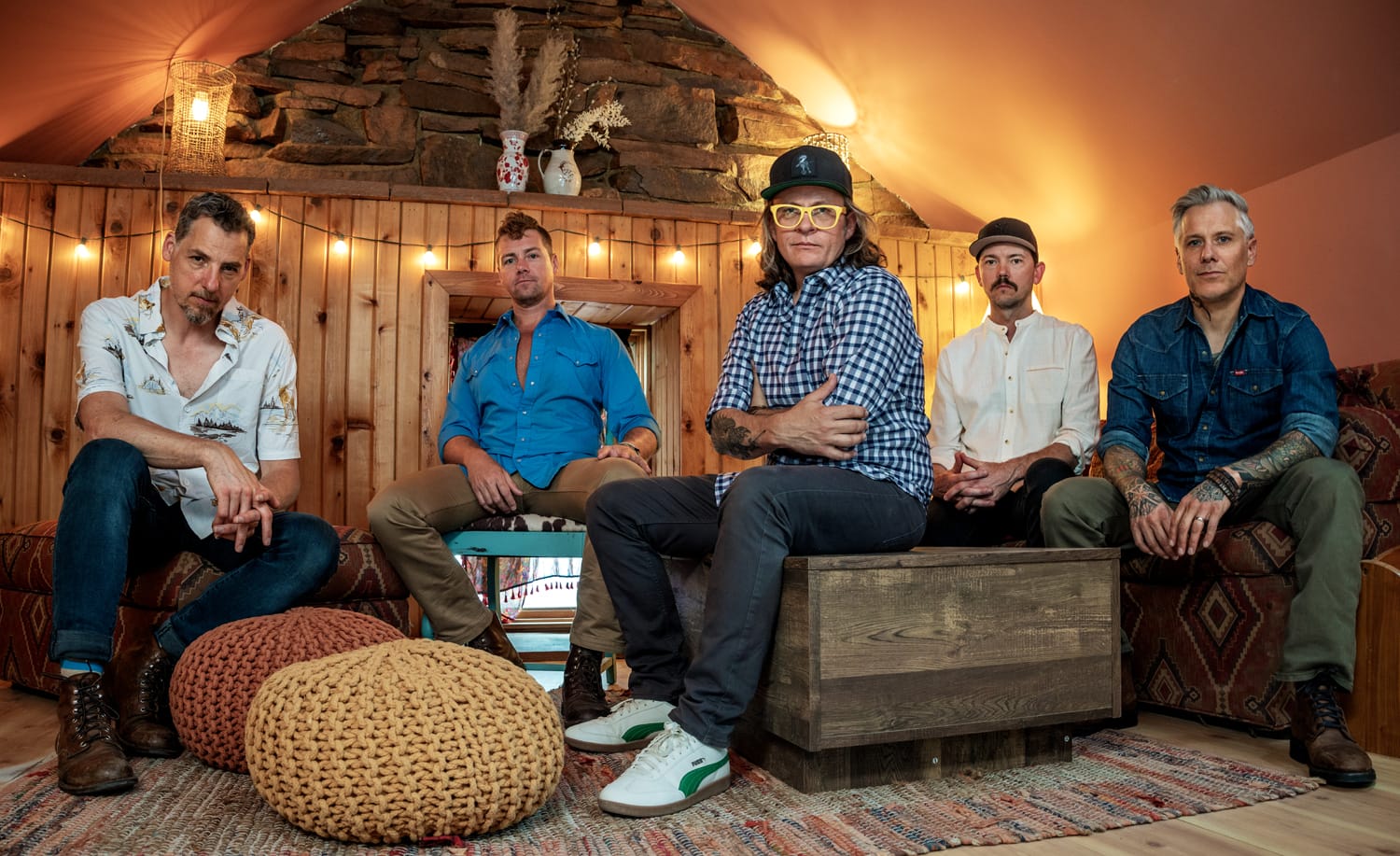
The quintet of fiddler Jeremy Garrett, dobro player Andy Hall, guitarist Andy Falco, banjoist Chris Pandolfi and bassist Travis Book is celebrating their 20th anniversary with 20 new songs, collected on their latest LP, 20/20. The album arrives hot on the heels of a recording streak that’s included 3 collections in the last two years. But where those records included covers and circled around themes (space, the mountain, the river), 20/20 is a pure-hearted collaboration—all originals from all songwriters.
As the ensemble prepared for a celebratory swing through the Mountain region, Garrett checked in from a tour stop in Nashville to talk 20/20—and to look back at the band’s long history and hopes for the future.
We’re talking just a few days before 20/20 is released. At this point in your career, does a new album release still feel momentous? Or is it just part of the life cycle the band?
Jeremy: That’s a great question. I’m an artist, but I’m also a businessman. So when I think about putting out a record, it’s motivated from several different angles. But this particular one does feel special. We really pushed to get 20 songs on this record to mark our 20th year as a band. And we ended up with over 50 songs on a long list. We learned and played all of those songs and narrowed it down to the best 20. We truly put work into each track on this 20-song record—like it was a five-song EP. We love each other’s material, and we love what we came up with.
When you think back on these last 20 years, what sticks out as a true “pinch-me” moment?
Jeremy: Probably the thing that sticks out the most is winning the Grammy award [Laws of Gravity won Best Bluegrass Album in 2018]. Winning a Grammy was the biggest catalyst as far as entering a realm where everyone knew we were legit. There was no question about that. We could relax. We had nothing to prove after that. It wasn’t about the award, but it was just this moment of, “Oh, hey, everybody is digging what we’re doing.” There was no pressure anymore, in this weird sort of way.
The Stringdusters are touring heavily behind this album—you have dates lined up all the way into the summer and fall. Is the band at the peak of their playing abilities right now?
Jeremy: Oh, yeah. By far. It’s kind of amazing to me, honestly. You’ll see bands you love, but over time the hunger and the spark get lost in the atmosphere or the relationships, and sometimes the music suffers. The Dusters are different. I’ve always loved that about us. When we put our band together, I wanted to keep all the integrity of the music as high as we possibly could. If we served the songs the best we could, and we all stayed at the top of our game—working individually, practicing, bringing our strengths together—I felt like we could never fail.
That sparked a competitiveness in a friendly way. You’ve got four other guys nipping at your heels, pushing you, playing the best they can. You can’t just lay down. It’s been a thing that’s only accelerated over the years. And onstage, we’re still having just as much fun or more than ever. I almost marvel at it myself.
Indeed, you guys have consistently released studio albums, but The Stringdusters are, at heart, a live band. Is there a show that sums it all up for you?
Jeremy: I remember these festival shows in Germany pretty early on—inside a giant circus tent. When we played those shows, people packed the place out and were screaming at us like we were the Beatles. It was insane. It was gas in the tank for the rest of our careers. We knew what we wanted to do, and we knew we didn’t want to be confined to lawn chairs. We wanted to play shows where people were dancing and standing up and partying and having a good time. It was eye-opening as to what was possible with bluegrass music — that people could receive it in the way they would receive a rock show.
20/20 is obviously a nod to the album’s 20 songs and your 20 years together. But it also references perfect vision. How has your vision of the band become clearer over time?
Jeremy: Especially after that trip to Germany, we realized we had to go back and start building our own audience, our own fans. We couldn’t just rely on people who love bluegrass. It had to be our people.
So we went to the clubs and played for nobody, for what felt like forever. We were driving around in vans and just toughing it out. It was a tough few years—we had to turn down a lot of guaranteed easy money because you can’t build value in a band if no one’s coming to your shows. At the end of all this, we’ve really built an incredible business. We’ve been able to live where we want, play the music we want, make the art we want. But the other thing I didn’t foresee was that we were going to build a community of friends and fans. They all see each other. They know each other’s faces. I look out and see their faces and I know them, too. It’s very reciprocal.
Let’s talk about the album itself. What did it take to make this 20-song record happen?
Jeremy: We were asking ourselves: what can we do that’s special for 20 years? We went around the horn about whether we could finish 20 songs. That’s a lot—especially if you really want each piece to be for real and not some jangly-sounding thing. You have to put time into it. Five guys with kids and wives and schedules—it’s a lot to juggle. At the end of it all, we were really stoked that we pushed for it. We figured it would be a cool thing in a time where everyone’s attention span is so short. It was a statement, but also a way to give a gift to our fans for investing so much time in us. We wanted to give them a lot of music. We wanted to crush them with new songs.
As always, each member of the band contributed songs here. Tell me about some of your favorite tracks on this record that aren’t yours.
Jeremy: One that sticks out is “Light at the End of the Day,” [dobro player] Andy Hall’s song. It has this really cool, melancholy vibe and a fiddle part that sticks in your head. I really loved how hopeful it was. [Banjoist] Chris Pandolfi has the instrumental “Long Claw,” which is fun to play through as an instrumentalist. [Guitarist] Andy Falco has “Working Man’s Blues,” which is really fun to play. It’s in the key of B, which isn’t the easiest key for fiddle, and it pushed me. I love to be pushed like that. There are all kinds of little pieces of the music I love throughout the record.
I love the leading fiddle melody that opens “Live Rosin,” one of the tunes you composed. When you’re playing around and a melody comes through you, how do you know what to hold on to—and what to let go?
Jeremy: I feel like if it sticks with you, it’s good. If it doesn’t, you’ve got to let it pass. Sometimes I’ll record a voice memo because I’m worried I’ll lose it. But I also feel like it’s only going to be good if I can remember it later. Does it come back to me the next day? Does it get stuck in my head? You remember old fiddle tunes and old hymns because they have a melody that stands the test of time. Sometimes something comes and you’re like, did I actually make that up? It feels like that melody has been around for a thousand years. When it feels like that—like it was meant to be—that’s when you know.
Let’s end on an obvious question. You’re marking the first two decades of The Infamous Stringdusters. Where do you see yourself 20 years from now?
Jeremy: I say Dusters for lyfe — with a ‘y.’ We’re all in pretty good shape. We try to keep our health right. Our musicianship is still at the top of our game, and I see us going 20 more years. Seventy years old is not unheard of to be in a band. I know bluegrass guys doing that and beyond. Del McCourry’s into his 80s. Ralph Stanley did it into his 90s. We built our own audience, and they’ve been coming along with us wherever we go. I feel like we’ll be around for a long time to come.