Al Schnier and Vinnie Amico Share a Segue at the TeachRock Benefit and Across the Years to moe.down

“I ask any of the jamband fans reading this, imagine if you’d had the Wall of Sound in your science class, earned some Econ credits by learning about the Dead’s business model, or had Mickey Hart help you through algebra. Might school have felt a little different?” asks Bill Carbone Executive Director of TeachRock. “The way we love music is so much deeper than just that moment of dancing, and as we engage in our pursuit of music writ large, we’re always flexing the mental muscles that schools are trying to help kids build. TeachRock uses the music to get kids excited about developing those muscles.”
Steven Van Zandt founded the non-profit, which aims to “improve students’ lives by bringing the sound, stories, and science of music to all classrooms. From The Beatles to Beyoncé, from kindergarten to AP History, in the classroom or remotely, TeachRock offers meaningful lesson plans all at no cost to teachers, students, and families, inspiring deeper learning and understanding through the power of music.”
Carbone adds, “In New York and CT, hundreds of students are getting high school history credits taking our “American History of Rock and Soul” course, which any teacher can use for free. We’re partnered with both the CT State Department of Education and New York City Public Schools to offer free professional learning to teachers that helps introduce TeachRock’s concepts and free content to support them. We recently held the ‘Day of Teaching Grateful Dead’ at Brooklyn Bowl, and in 2026 there are workshops on the Harlem Renaissance, Latin Music in NYC, Jewish heritage in popular music, and Caribbean music and diaspora in the Northeast. All free for teachers and made possible by events like these.”
His zeal for this endeavor is prompted not only by his passion as a music fan but also by his perspective as a musician himself. The drummer has been a member of Max Creek since 2011 and has appeared in numerous other groups including Miracle Orchestra, The Z3 and Sparkplug.
TeachRock’s Executive Director has assembled a special band that he’s dubbed Segue, which will appear at two benefit shows for the organization this week. The Help on the Way Holiday Tour will take place on Wednesday, December 17 at the Fairfield Theatre Company in Fairfield, CT and on Thursday, December 18 at New York City’s Cutting Room.
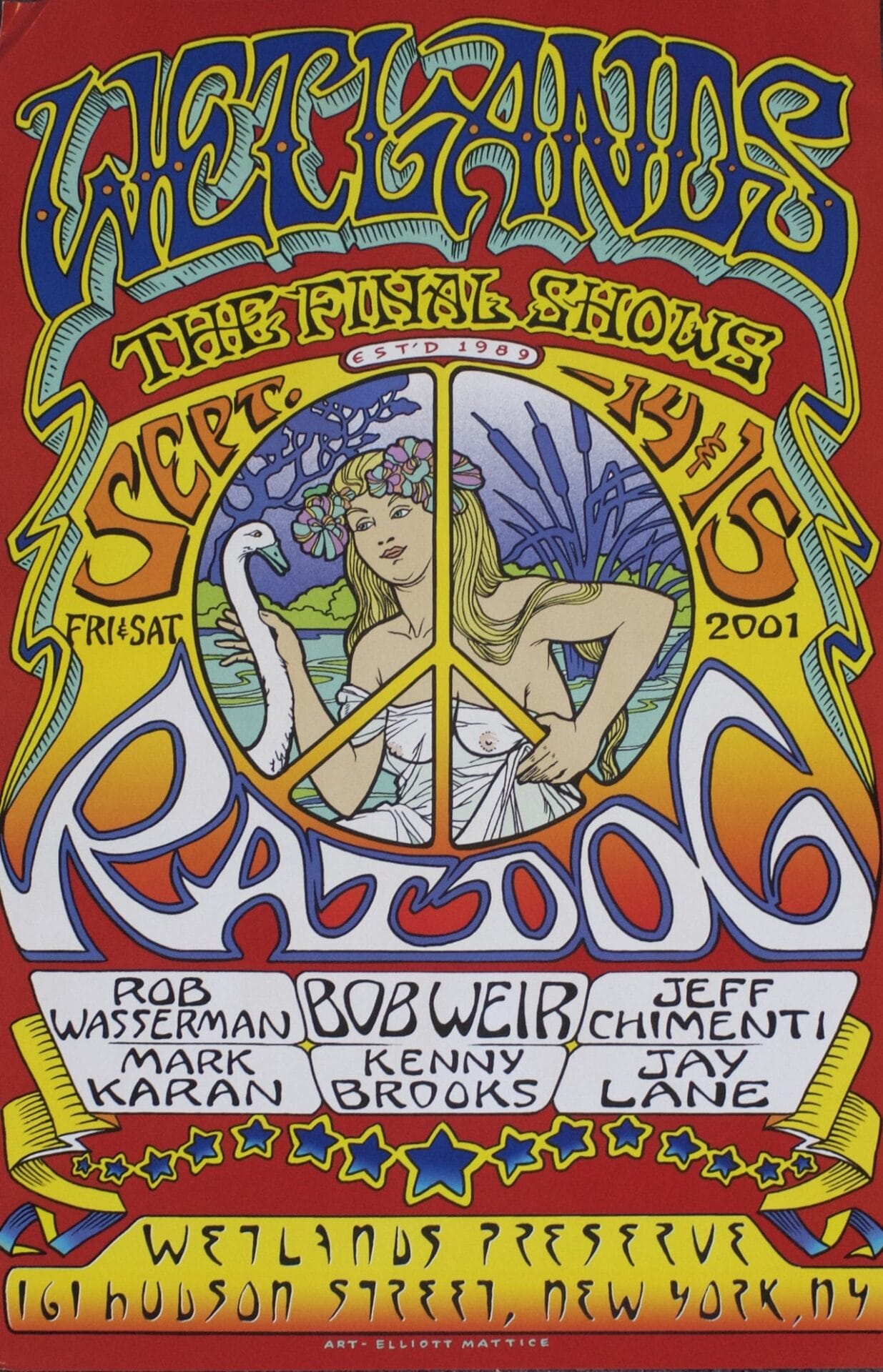
The drummer notes, “Even though I’ve been an active performer in the jamband scene since the mid-90s, this is my first time playing at a TeachRock event. I was lucky enough to come of age over the course of hundreds of sweaty nights at the Wetlands and in the basement of the Tribeca Knitting Factory. That era filled me with a spirit of creativity and collaboration that in many ways defined who I became as a person.
“This ensemble was created in partnership with one of my oldest musical friends, Tim Palmieri. And we used it as an opportunity to extend an invitation to other players whose musicality we admire but haven’t necessarily made a ton of music with. We will tip our hat to the Northeast Grateful Dead community that has truly stepped up to support TeachRock over the last several years without being a Dead cover band. We’ve got a theme that guides a series of ‘mashups’ of Dead classics and songs you’d never expect to hear in this context. It’ll be high-energy and fun.”
In addition to Palmieri and Carbone, the group also will feature moe.’s Al Schnier and Vinnie Amico, along with Eggy keyboard player Dani Battat and Bearly Dead bassist Sarah Elaz.
The moe. duo will participate in these benefits on the heels of a few southern dates with their Bob Dylan tribute band, bob. Beyond this, Schnier and Amico recently wrapped up moe’s 35th anniversary tour. The group’s lone remaining 2025 date is set to take place on December 27 at the Palace Theatre in Albany before the band’s spring tour kicks off in February. moe. also recently announced that its moe.down festival will return after a 7-year hiatus, moving from the New York locale where it debuted over Labor Day weekend 2000 to West End Fairgrounds in Gilbert, PA on July 16–18, 2026. Schnier and Amico reflect all of this developments in the following conversation.
As we speak, you’re currently in the south, performing a few dates with your Bob Dylan project just prior to the TeachRock gigs. How did bob. initially come about?
Al Schnier: The whole thing came together as an idea for a friend’s birthday party about a year and a half ago. Our friend Colin is one of the owners of Ray Brothers BBQ in upstate New York. They have a great backyard concert series in the summer, we’re all friends, and we’ve played there a number of times. He had a birthday coming up, Bob Dylan is one of his favorites, and he reached out to our mutual friend, Charley Orlando, who you may remember from Dexter Grove. Colin asked Charley to put together a band and do a Dylan thing for his birthday party.
So Charley asked Vinnie and I, along with Zach Fleitz, who was the bass player in Floodwood with us. The keyboard player is Brian Lauri, who plays in a band called Root Shock. So we did this party and threw together a setlist. It was 25 songs, no rehearsal, and we just had an epic night. It was so much fun. The room was lit, the response was palpable, and we decided we need to do this more often. So here we are a year and a half later and we’re doing it more often.
What approach do you take to the catalog?
Schnier: The great thing about Bob Dylan’s music is that it’s so approachable and versatile. Even he has 30 different arrangements for any given song. So there’s a lot to work with. But then there are all of the other versions—the Grateful Dead versions, Jerry’s versions, bluegrass takes, The Band, I can go on and on. When you think about it, this catalog of music is its own Real Book. It becomes a book of standards that you can kind of do anything with. We’re choosing little bits and pieces of the best of these things and we’re like, “What if Crazy Horse played a version of this song and kind of leaned into it a little bit more?” Or “What if we took a little bit of Bob’s version and Jerry’s version and put them together so they’re one version and not two radically different versions.”
We’re rearranging a lot of that so it becomes this very approachable, listenable experience. We want it to be entertaining and it becomes a dance party where you can kind of rock out to Dylan and have a whole night of music. We’ve got 40 to 50 songs that we’re playing and we’re only scratching the surface. We aren’t even playing all the greatest hits at this point.
Vinnie Amico: We’re all professionals who have been playing a long time, so we’re developing a style where we sound like a band. We’ve arranged these songs certain ways and we’re starting to play them like us, and improvise like us. So it’s not necessarily just a Dylan tribute because we’re playing these songs like we would play them and it’s definitely got its own style.
Can you talk a bit more about song selection given the range and scope of Dylan’s material? What led you to “Idiot Wind,” for instance? That’s an awesome pick to my mind, although I imagine at least some folks won’t be familiar with it.
Schnier: We’re doing “Idiot Wind” but we’re not playing the studio take. We started listening to all the different versions of it, and the Rolling Thunder version of it is so freaking cool. That was one of the ones we were like, “This kind of sounds like Crazy Horse playing this thing. What if we kind of leaned into it that way and took this approach?” So it’s really slow, it’s dirty, it’s heavy, and it has this other sound to it that is unlike the record because those lyrics are so visceral.
Amico: They’re brutal. We played it last night and it was awesome.
Since you’re bringing so much intent to all of these, to what extent will you articulate the back story to the audience?
Schnier: Sometimes I might introduce a song and talk about those things. I’ve been a Bob Dylan fan since I was 12 years old, but also a Grateful Dead fan since a very young age. The overlap of those two things and the things that I gleaned from both of those catalogs and about the American songbook really resonated with me as a teenager and growing up learning something about our cultural history. It has sat with me my entire life, and it means a great deal to me. So for us to get to be a part of it is a big deal. That’s one of the things that I convey to the audience.
But a cool take on that is there are very radically different versions of “Peggy-O.” They both played that song, but Dylan played it almost like a bluegrass song. His folky version is fantastic. It’s very fast, though, as opposed to Jerry’s take on it, which is beautiful and it’s one of the prettiest Grateful Dead songs. We combine them and put them both together in one arrangement. So I’ll talk about that before we do it and how they overlap and how we get to be a part of that ongoing conversation.
“Tom Thumb’s Blues” is another one. I love that the Dead started playing that song and Phil sang it. That meant a lot to me but I also love Dylan’s version of it so much that our version is sort of a combo of those things. Dylan’s version has this dirty, rocking quality to it. It sounds more like the Rolling Stones playing that song. The Dead tempered the sort of visceral quality of that song a little bit. I like Dylan’s take on it, but the Grateful Dead also bought some form and function to some of the Dylan songs.
So I do talk about some of those things because I’m a fan. I’m such a dork about all of it that I like to tell them why it matters.
As you describe this, it reminds me of a moe. gig I attended back in 1997. It was 21+ and it took place at Boston College. This meant that most students couldn’t attend and the only way that folks like me could get in was through the invitation of BC student who was at least 21. As a result, there were more people standing outside and listening than actually seeing you from inside the room. It was very odd experience and at some point during the night, Al, you encouraged members of the audience to name a moe. song and a style of music. Then the band performed the song in that style. What do you guys recall from that night, if anything?
Amico: I don’t quite remember it.
Schnier: That sounds familiar to me, but my memory is even worse. However, it definitely sounds like something that we would do and certainly be open to. We used to do it all the time in rehearsals. I don’t know if it was an exercise or we were just looking for ways to diversify what we were doing or if we did it out of boredom or the sense of adventure. I don’t know why, but it’s something that we found interesting and if nothing else, it was probably good for our chops.
It was almost like a magic trick where you were you taking suggestions from the audience and then delivering on them. I’ve always thought that was quintessential moe. in many respects, since you were so willing to give it a go.
Schnier: I think the key point there is the willingness. The notion, and this is definitely quintessential moe., is that we’ve never been precious about our music. We’ve always been willing to destroy it, to break it up entirely and see what’s left of the pieces, then put it back together again and see if we can make something beautiful out of the mess. I don’t know if we thrive on it, but it’s always been a reliable tool for us.
Amico: That’s true to this day because we’ll have songs that we work on, and if they don’t come to fruition, they’ll get put away and a part comes out in another song. It’s like an old car that we’re going to sell for parts, and then we take those parts and make a song.
Schnier: It’s like that band of cables you have in the basement. One of them finally is going to be useful.
That makes me think of “Living Again,” which appears on your latest album. Circle of Giants features all new material along with that one song, which you debuted back in 2001. What led you to finally record it?
Schnier: When we first started playing “Living Again,” there were other sections to it, and it had sort of a different feel. It didn’t last, though. The reason it didn’t stick probably is because it wasn’t working, and rather than fixing it, sometimes you start focusing on other stuff, so it goes away.
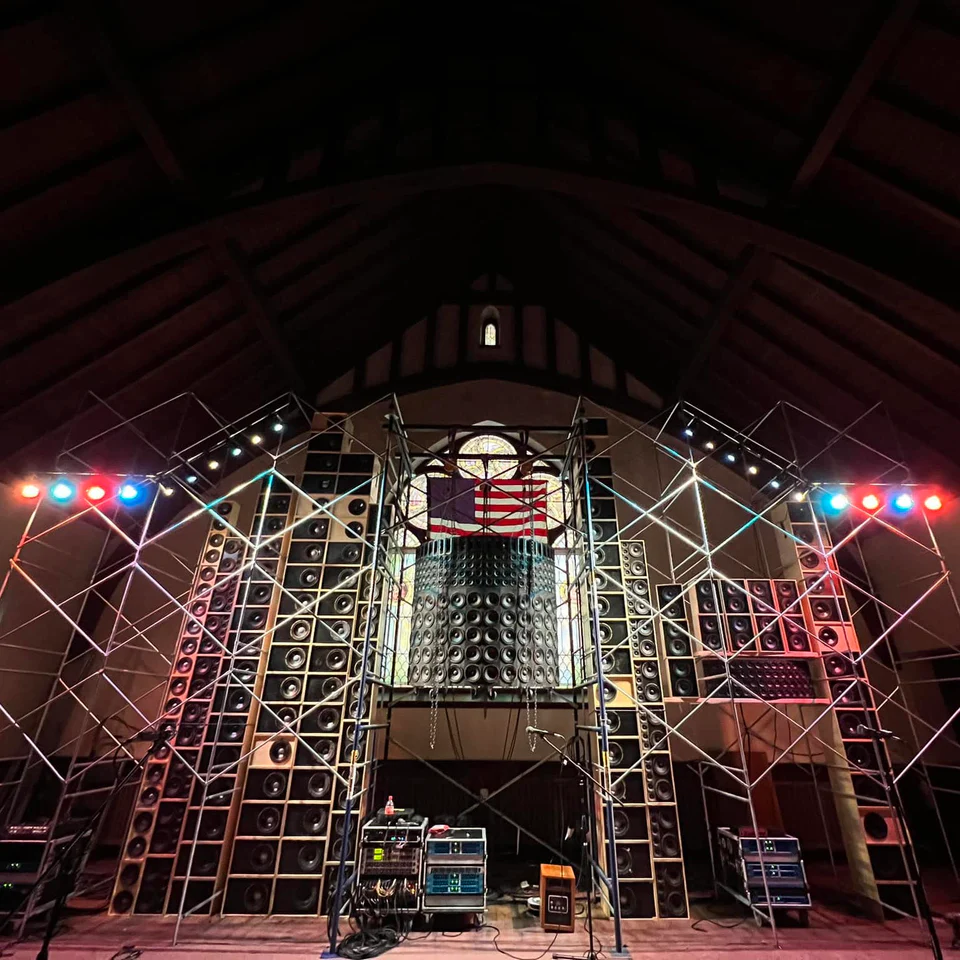
We had some very vocal fans who were not happy with that situation and kept bugging me about fixing it. So we tried again, I think with the same arrangement and played it a couple of times. That didn’t work, and ultimately I realized the problem was that the part I was trying to force just didn’t belong. So where it wound up in its current configuration is kind of the place where it just needed to be. It needed to be left alone, and then we came up with that whole ending section where we sort of leaned into the quietude for part of it but then I also told the band that I wanted to build this into a wall of sound, but not the Phil Spector Wall of Sound or the Grateful Dead Wall of Sound. I wanted it to turn into a beautiful noise, almost with a Sonic Youth-like quality, where that chaos actually becomes meditative or something that you can zone out to.
So that finally became the resting place of that song. It was like, “Oh, that’s where it always needed to be.”
Amico: It was the cable.
Schnier: It’s really fun to do live, and why it wound up on the record after all of these years is because this 25-year-old song now fit with the songs that we were writing concurrently. I was not even thinking about recording it. Rob was the one who suggested that it would be a really good missing link for the record.
Amico: And it does fit on the record.
Sticking with current events, let’s talk about the TeachRock benefit shows. How did the two of you become involved?
Amico: I’ve been watching it from afar because I know Bill. He and I have played together and we get along really well. So I’ve been watching his career outside of music and what he was doing, which was really cool.
Then about a month ago, he reached out to me and said, “We want to do this event. Would you be willing to play?” I was like, “Hell yeah, I’ll do it.” We started talking but then Rob Eaton’s health turned and Bill was like, “Do you think Al would play?” I said, “Yeah, he would definitely play.” So that’s the origin of Al getting in.
Now as far as the event goes, everything they do is for a great cause. Just trying to keep music in schools in general because it’s been stripped away, is amazing. Having someone like Little Stevie behind this kind of brings it to another level where the organization can make things happen, and raise another echelon of money from donations and stuff.
So he got behind something that can actually do what it’s intended to do. As far as I’m concerned, I’m just glad to be a part of it because I want to keep music in the schools.
Schnier: It’s cool that Stevie is doing this. The nonprofit is a huge effort on his part to get funding for music education and for the arts, where it’s severely lacking. Now more than ever. They are not only providing instruments and financing, but also writing curriculum, because even that’s gone away at this point. It’s a whole package of providing music education to kids where it’s missing.
I’ve been watching this from afar because I’m a huge Bruce Springsteen fan, and Stevie is one of my favorites. I have an unhealthy obsession with sidemen and the people who make a difference for their teams. Stevie’s one of those guys. I mean, he’s been Bruce’s ride or die forever—his harmonies, his rhythm guitar playing, all of those things. I think he’s an unsung hero in his own right.
But the other thing that he’s been doing for years is he has a policy for his shows where teachers and students who have an A average, or are on the honor roll, get to come to his shows for free. It’s one of those things that I noticed and I picked up on. So I implemented a program like that with moe., where it’s for teachers, nurses, first responders, etc. We also have some guest list tickets set aside for people who may not have the means necessarily to come to our shows. I stole that idea from Stevie and it’s awesome.
Amico: Going back to the program, data shows that music in schools helps kids become smarter. The more they get to have arts and music in schools, the better they do in school. That’s from the data and the fact that it’s been stripped away is just ridiculous.
Schnier: Not to mention playing music with other people in the context of any kind of ensemble, whether it be marching band, jazz band, concert band, a rock band or whatever, does so much for your own development as a human being. It teaches you about navigating through the world socially, interpersonally, all of these things.
Nate Wilson and I were talking about this recently. It’s fascinating to me that psychologists have not honed in on this and done studies on rock bands on the road as this weird microcosm of human society and how we function. It teaches you so much about moving through the world, and it’s great for kids to figure out at a young age too.
What can you share about the music that people can expect to hear at these shows?
Amico: The plan is to mashup a bunch of songs with Grateful Dead songs, mostly stuff about school. The band is going to be killer—they’re all great musicians—so we’re going to put together an unforgettable show.
Schnier: There’s definitely a high school teacher kind of theme to the whole thing.
I won’t ask for any more details, so that folks can watch it all unfold in the moment on Wednesday and Thursday. But Al, since you mentioned Springsteen, I recall that on Saturday night at Bonnaroo 2009 you were riding the rail for the E Street Band performance. It ran a little long and as soon as it ended, a few people passed you over the barrier so you could have a clear path to the tent where moe. was about to play. I caught some of your performance and it seemed like a bit of Bruce had worn off on you the way you were making big gestures and moving to the edge of the stage to interact with the audience. Do you remember it that way?
Schnier: I remember being on the rail for Bruce and that whole thing. What I don’t remember is anything about our show afterward except that I was 15 minutes late because I was not leaving until the E Street Band was done. Skippy [Richman, then the band’s tour manager] was pissed at me but I was like, “Look, I told you I was staying to the end of this thing and I will be there when I be there.” That’s the only thing that I remember. I don’t remember anything about our set that night. I’m sure that I was inspired. I’m sure my teenage self came out at large. Certain bands do that to me. Pearl Jam is the same way. Every time I go see Pearl Jam, I’m ready to climb the rafters.
Amico: I wasn’t a huge Bruce Springsteen fan. I remember watching them at Bonnaroo from further out in the crowd and not up front. The thing that blew my mind, though, was that how engaging he was, how for such a big crowd he played for every single person and made you feel like you were in a club. It was crazy.
Schnier: It’s amazing. And again to sidemen, Max Weinberg is one of my favorites. He is the engine room of that thing and just unbelievable. It’s one of the reasons why I love Vinnie so much. I tell him that he’s one of the most dependable, badass drummers out there. He’s not flashy, not overdone, not anything other than awesome all of the time.
I think the reason that some of those early shows are on my mind is you just announced the return of moe.down. What are your memories of the first event and what can you say about its connective tissue to the forthcoming festival?
Schnier: One of the things I remember from the first one is I went up a day or two before my family did. I don’t even think we had access to the lodging where we were going to be staying. I brought my mountain bike and I brought a tent with me. Then I set up in the area where the backstage ultimately was going to be. I was so excited that I literally went and camped by myself at the site of moe.down.
I’m pretty excited about the current one as well. I would say of all of us, Rob has probably been the one who’s been the most persuasive about bringing moe.down back. He’s been talking about it a lot and he’s really wanted to do it for a while.
The promoter that we have always worked with, Chuck Chao from upstate New York, happened to find this new site recently, coincidentally right along with Rob wanting to bring back moe.down. So all of that kind of worked out sort of perfectly.
What I always loved about moe.down is there was such a chill, familial vibe out in the audience, while the music itself was anything but restrained. Also, now I think about it, we hosted a Relix basketball tournament in 2002 and 2003. Your crew helped build the hoop, you gave the winning team trophies from the stage and Vinnie even played both years.
Amico: The tournament was amazing, although the hoop itself was not great. Plus I got eliminated early, so I wasn’t happy. However being that I still play basketball three times a week consistently since then, I’m ready. I’m a much better basketball player. We should do it again this year. I’m injured currently but I’ll get all my injuries out of the way so I can play.
Before announcing the forthcoming moe.down, you guys teased it by posting an image of Al wearing his 2000 moe.down shirt. Seeing that prompted me to go look for my own, and in the process I found a number of moe. shirts, spanning a few decades. You’ve incorporated some evocative imagery over the years. I’m looking at your 10th anniversary tour shirt with a robot, which remains a personal favorite.
Schnier: We’ve done a pretty good job of ripping off all the iconography of our childhood and teenage years and repurposing it. [Laughs.] I think Ames Bros. did the one with the robot. It’s great. My wife Melanie has that poster hanging up in her office.
The dates on the back of the shirt remind me that the tour opened at the Orpheum in Boston, just three days after 9/11. Your performance will always stick with me, in particular the “New York City” encore which moved some of the audience members to tears. It was such a powerful expression of what music can offer.
Amico: That was the first time I cried while I was playing.
Schnier: We were not sure that we were going to play at all. We had talked about canceling the shows. Many things were being canceled at the time. We weren’t sure about a public gathering—the safety of it or the impropriety of it. Then we decided that it was actually what we needed to do and that doing anything else would actually be the wrong choice.
Amico: There were a lot of people that we talked to after the fact who told us how much they appreciated we had done it.
That’s exactly what I heard from the people around me, after we initially walked out in something of hushed daze. Again, that show was part of your 10th anniversary tour and moe. recently turned 35. Still, you continue to hone your sound and added Nate Wilson on keys a couple years ago. Prior to this, Al, you had a small keyboard rig on stage. How has Nate’s addition impacted your approach?
Schnier: When I played keys in the band, it was always just to play a part. It was usually parts that I had written because we wanted a different sound, whether it was synthesizer or piano because we didn’t have a dedicated keyboard player.
That was the first instrument I learned on, so I can fake my way around it. I have a foundation on it, but I am not by any stretch of the imagination a keyboardist or a pianist. I don’t have the confidence or competence to solo or improvise on that instrument. It was really strictly for playing the parts, just kind of being the sideman in our band. So to have Nate come in who is the best musician in our band is amazing.
It’s a joy to play music with him. I mean, he’s a wonderful human being to be around, but playing music with him is fantastic. I am content playing rhythm guitar to him soloing all day long because he’s that good, and I have such a good time doing it. I can’t stress enough how it’s elevated our band and lifted us up to this new place I didn’t know we had the potential to reach.
I’ll add that his vocals are another thing. He has a great voice and his larger voice, not just his vocals, but what he brings to the context of the band, has made for a great addition. It’s not one that I knew that we were looking for or needed but it’s been a really happy surprise.
The lineup at the TeachRock benefit includes Dani Battat from Eggy. His group opened a number of moe. shows this past year and you shared the stage on occasion. Can you talk about connecting with younger bands, many of whom grew up with your music?
Schnier: There are those bands like Eggy or Daniel Donato’s Cosmic Country that have come on the road with us and we’ve sort of taken under our wings. They’re such hard working bands and we see them out there going through the same paces that we did when we were their age. They’re really great dudes, so it’s nice to see them.
It’s funny because a lot of them at some point or another grew up listening to moe., which is cool, but we’re at a point now where now we’re all friends. We’re hanging out with each other, playing music together and drinking whiskey after the show. But we can also give them tips along the way or some encouragement for the things that they’re doing. I’m a fan of both of those bands and all the work that they’re doing. I talk to them all of the time.
Amico: People did that for us. I remember going on tour with Bobby and we were like, “Holy shit!” But pretty quickly we were hanging out together. He made us feel like peers rather than just fans.
Finally, as you look ahead to 2026, with a steady slate of spring dates already announced and moe.down to follow, with plenty more in the works I’d imagine, what can you say about your goals and expectations for the coming year?
Amico: We just want to get our music out to people and let everybody know we’re still doing this. We’re still into it. We haven’t gone anywhere and we’re not going anywhere. We’re making better music than ever. The band’s playing better than ever. We want people to know that and to be out there with us.