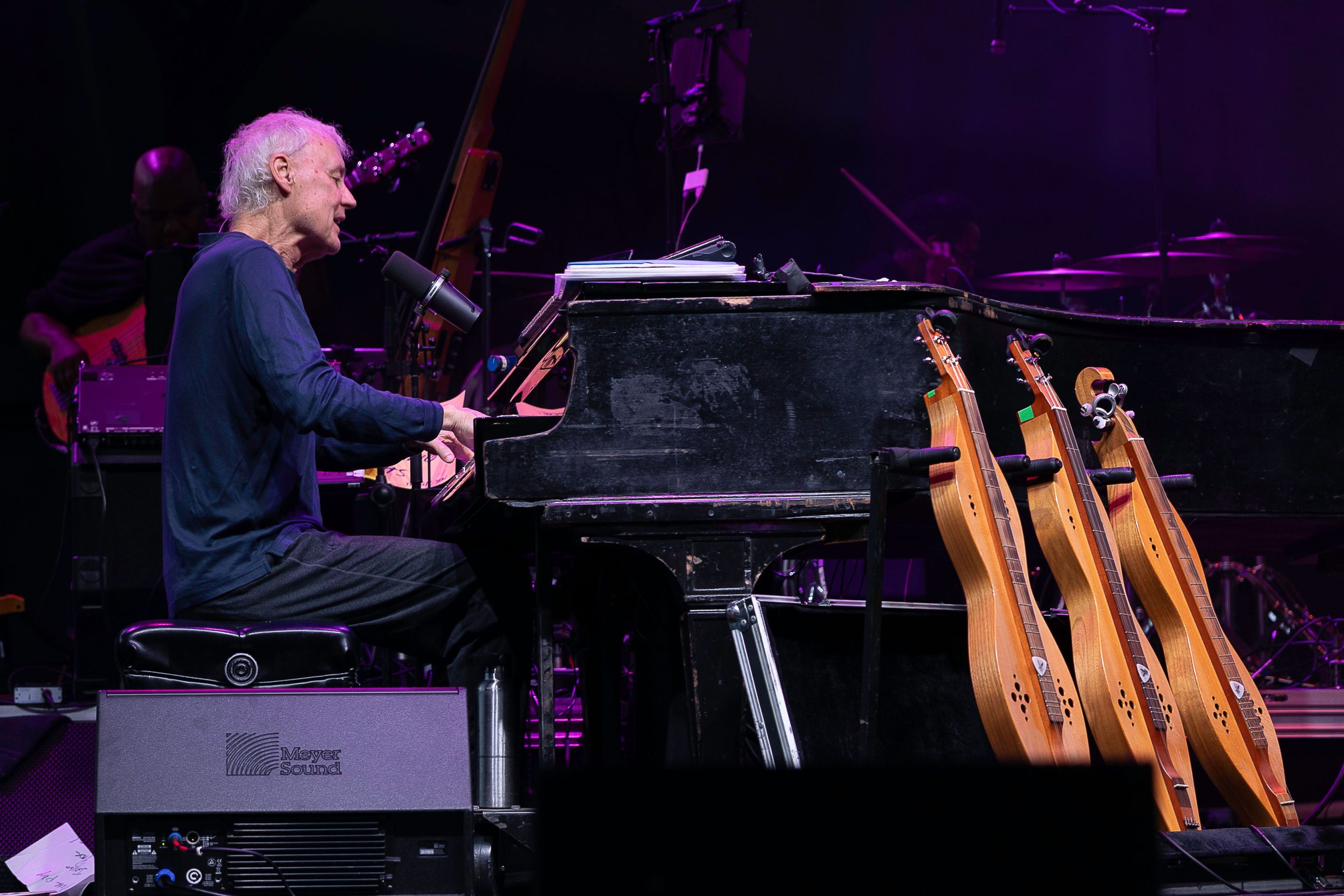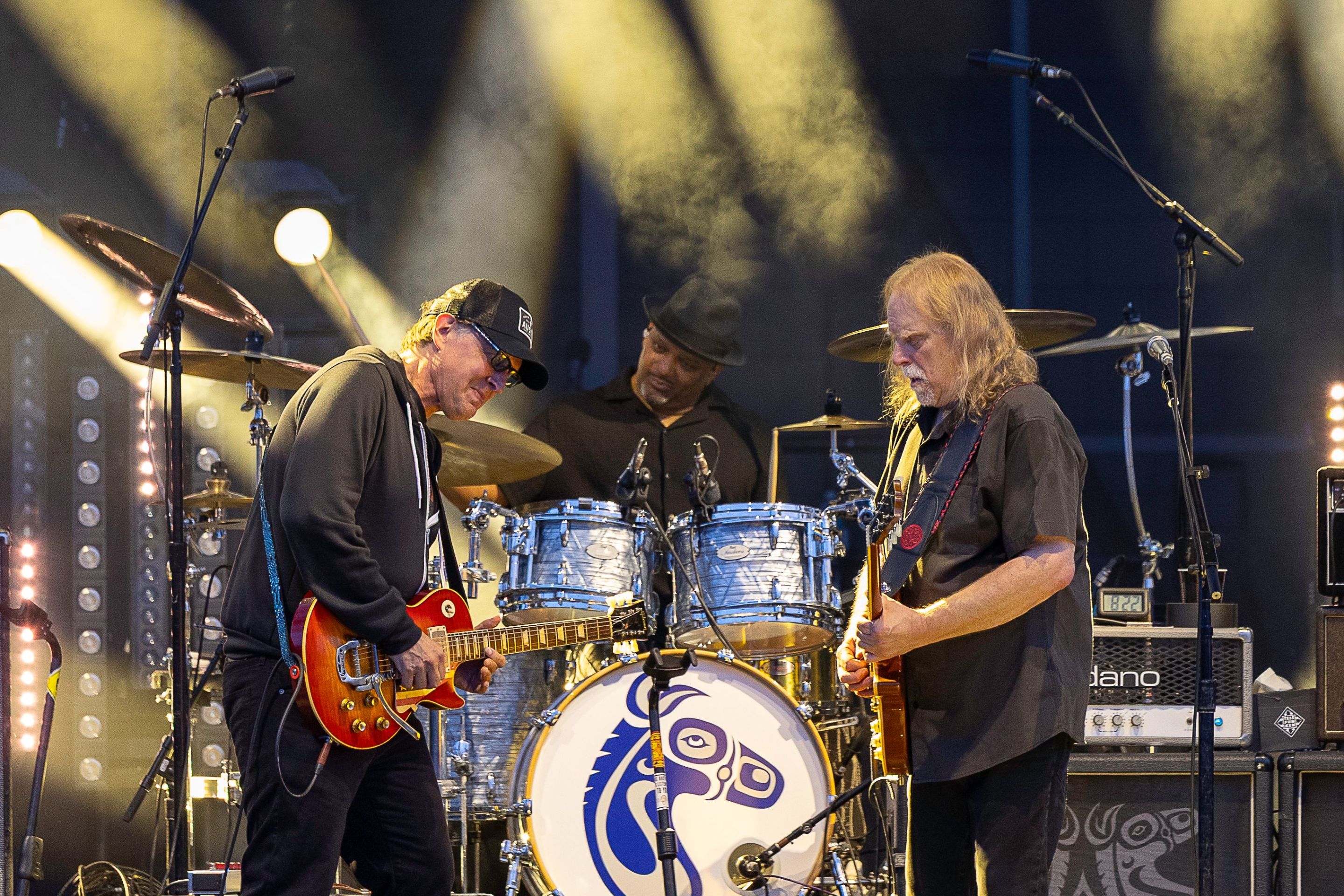
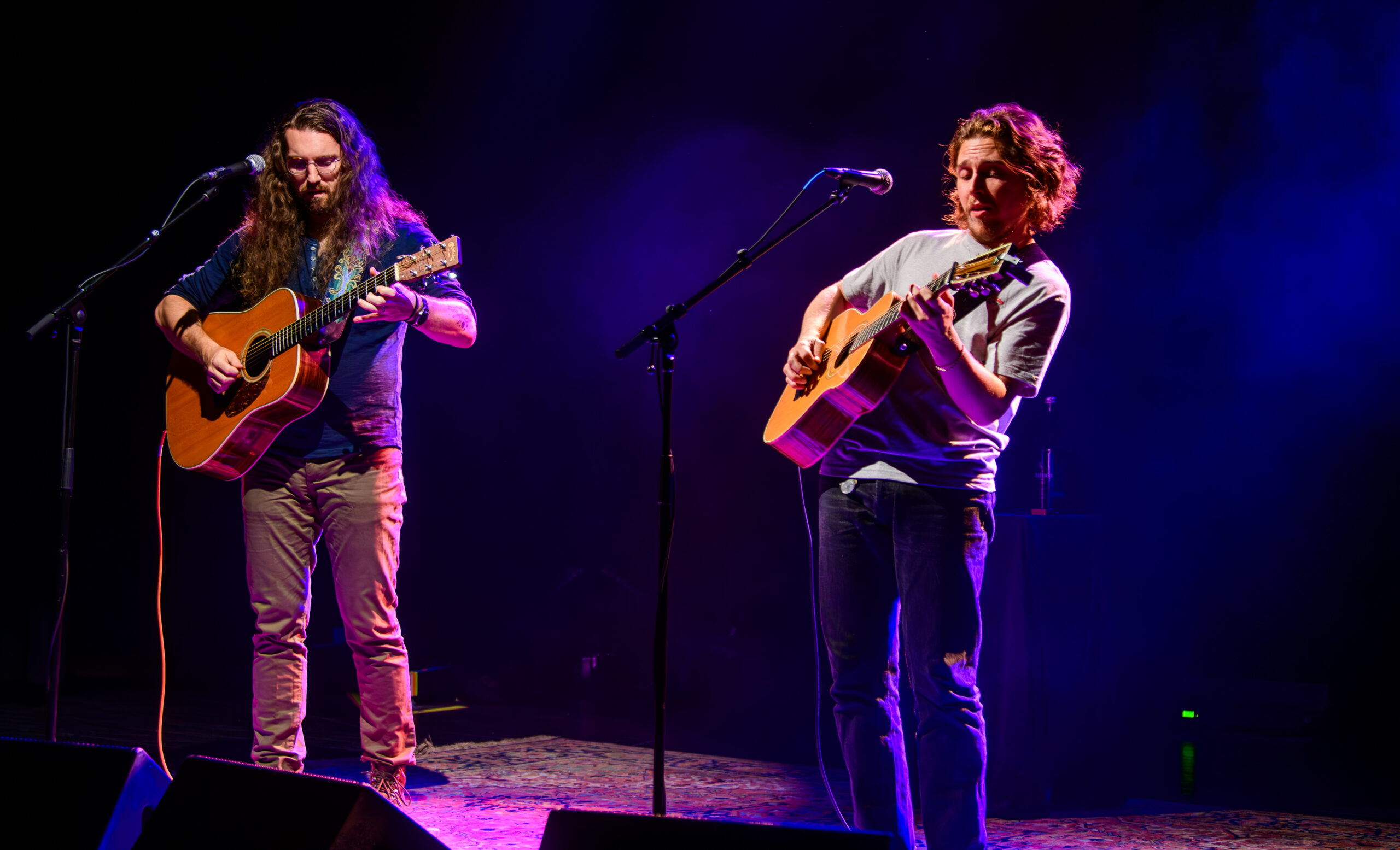
On June 12th, Grahame Lesh and Daniel Donato played an epic two-man acoustic show at the Bearsville Theater in Woodstock, NY. A live duo is almost the most exposed format there is: two players, two guitars, two microphones; nowhere to hide, no rhythm section to lean on, every choice audible. But Lesh and Donato clearly were playing for the love of the game, and those in attendance were lucky to bear witness to two top-notch musicians enjoying the shit out of playing together.
The second night of their three-show Woodstock run sold itself as a Grateful Dead acoustic summit, but what it delivered was stranger and better: a duo treating the most familiar songs in the catalogue as raw material for an active conversation between two players fluent with the material. While the first night of the run went digging for rarities, night two reached (mostly) in the other direction, for songs a Dead fan could name in three notes; but the duo declined to play them the way muscle memory might expect.
They opened with “Whiskey in the Jar,” a traditional Irish song of a rapparee made incrementally more American by every domestic artist to rough it up. The set kept pulling at that thread, with Gram Parsons' “Grievous Angel” and a closing “Rosa Lee McFall,” the Charlie Monroe bluegrass number the Dead carried into their own acoustic sets decades ago. The way they eased into GDTRFB was a deliberate exercise in Phil-esque counterpoint, and Donato's country instincts were all over the selection, as he yet proved himself a player who hears Bakersfield and the psychedelic underground as one tradition.
The interesting part was the handling. Bob Weir’s “Black-Throated Wind” stretched past its studio shape, the two guitars wandering in different directions and somehow arriving together. “Friend of the Devil,” complete with its lost verse, showed up by a side door, a funky and slightly disreputable approach that took a few bars to show itself as an old friend. A loose, searching intro circled a while before it resolved into “Ruben and Cherise.” Neither player settled: whenever one locked into a pattern, the other tilted it.
Set two is where the duo let the leash out. “China Cat Sunflower” arrived with all its coiled momentum, and at the exact moment four decades of Dead shows train you to expect “I Know You Rider,” it dissolved into “China Doll,” a warhorse rerouted mid-stride into one of the catalog’s eeriest songs. (A small shock, the best kind.) From there the improv took over: a “Wheel” sandwich opened Midnight North’s Dead/Hunter collab, “Jupiter,” the pieces folding into and out of one another until the seams disappeared. This is the part of a duo show that can go wrong, two acoustic guitars trying to fill the space a full band leaves. But it didn’t because Lesh and Donato never treated the open stretches as solos waiting their turn, rather treating them as dialogue: one would float a phrase, and the other would answer it, complicate it, and hand back something altered.
This gets at what made the night work: for long stretches the two seemed to play to and for each other more than the crowd, bodies angled together, trading lines like people who'd stopped performing and started simply conversing. In a bigger room that intimacy might have evaporated, but at Bearsville it held and then some: you could watch a song change in real time as one player reacted to a choice the other had only just made. It also helped that they're so different: Lesh is patient and harmonically grounded, raised inside this music's language, while Donato is restless, faster to a flashy idea, and more willing to break something to see how it works. Put them in two spotlights facing each other, and the contrast became the show.
They closed with “Box of Rain,” Phil Lesh's song with lyrics Robert Hunter wrote for a dying father, here sung by Phil's son. It could have tipped into memorial but didn’t: they played it plainly, like something they simply wanted to sing, rather than a statement they needed to make. It landed on its own, as did the rest of the music they played that night, demonstrating the longevity of the catalogue and how the right players can make what’s old sound new again.